My limen: Traveling north along the California coast
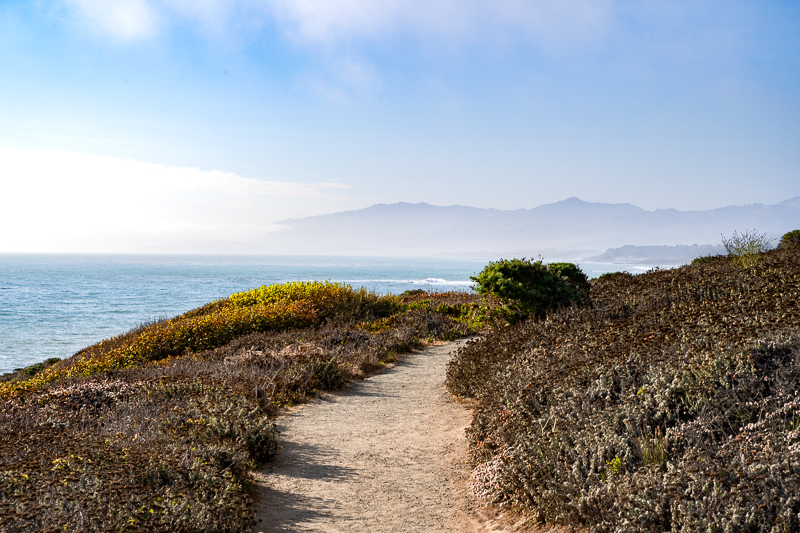
Limen: Latin limin- limen, transverse beam in a door frame, threshold; akin to Latin limus, transverse; since 1895, in experimental psychology, the sensory boundary dividing the unperceived and the perceived realms of our experience or being; the limen, as a figurative threshold, functions as a stimulus for our passage from the former to the latter, that is, into consciousness.
Of my many trips north from Los Angeles to San Francisco I mostly remember my journey by train in September of 1968. Having begun college in the spring quarter of that year, I was returning to begin my first full year of college. I was also moving into a co-op (Cloyne Court), having spent the spring in a dorm. I was traveling alone, forging ahead into a future that held unforeseen adventures, and was doing so by a mode of transportation –the railroad– that had by that time become seemingly obsolete in California but that would over time become an important part of my experience as a quester.
Powerful experiences for an 18-year-old framed in my memory by what was for me the most stunning aspect of the trip. As we moved north beyond Oxnard and Ventura the train tracked the coast so tightly that it seemed as though the ocean waters would reach the rails. I was transfixed by this and by the sun glimmering over the foamy waters, the gulls floating by, the soothing song of the waves and, most importantly, by the warm and comforting feeling of the solitude that embraced me. I felt propelled by it all and have always wanted to retrace those steps, those moments, hoping somehow to recover the sensations that they produced. Our two-day journey from Los Angeles to San Francisco this summer was inspired to a degree by these thoughts and by my urge to understand better the meaning of the path I forged so many times, during that period of my life when the north-south California highway was my second home.
What I was most struck by was what seems to be a uniquely California coastal culture, one defined by a series of towns extending north from San Diego up to San Francisco and beyond. These are relatively small towns often hidden from view for the masses of travelers who fly into and between Los Angeles and San Francisco. Our lunch and walk with my niece and her family in Encinitas, near Carlsbad (San Diego), was something of an appetizer for our more sustained exposure along the central coast. The towns we visited more or less purposefully –Pismo, Morro Bay, Cambria– and those we skimmed –Cayucos– brought me to envision something of a cultural coherence, in terms of the ecologies, architecture, the social and economic patterns and the cuisine of these towns, to the extent that a casual meal or a stroll down main street and into the hinterland can reveal such a thing.
I was struck, for instance, by the commercial art deco façades and signboards lining the main street in Pismo, and by what those signs tell us about the community.
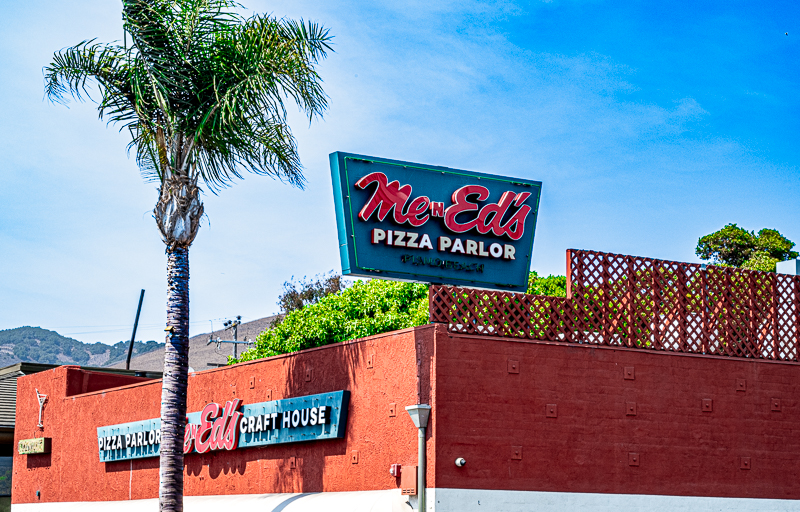
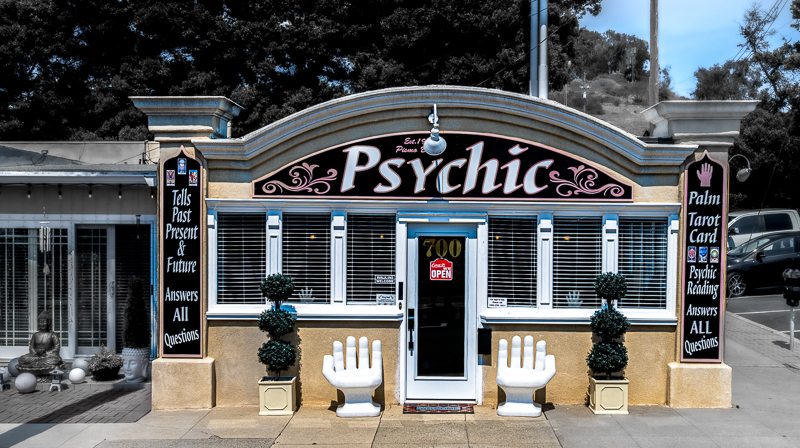
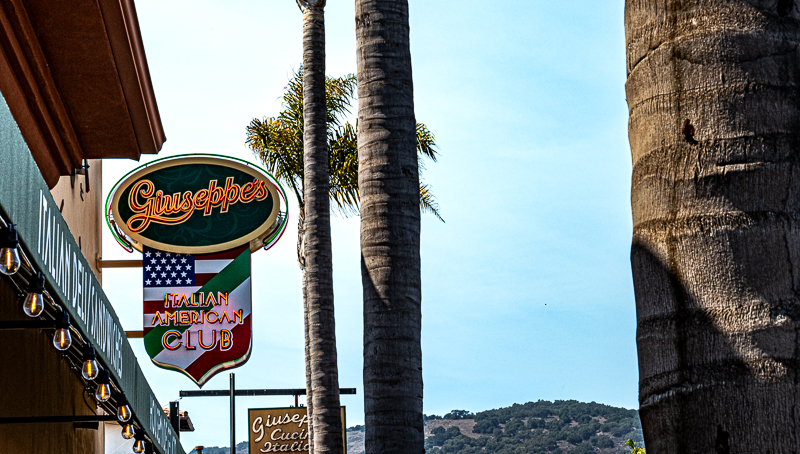
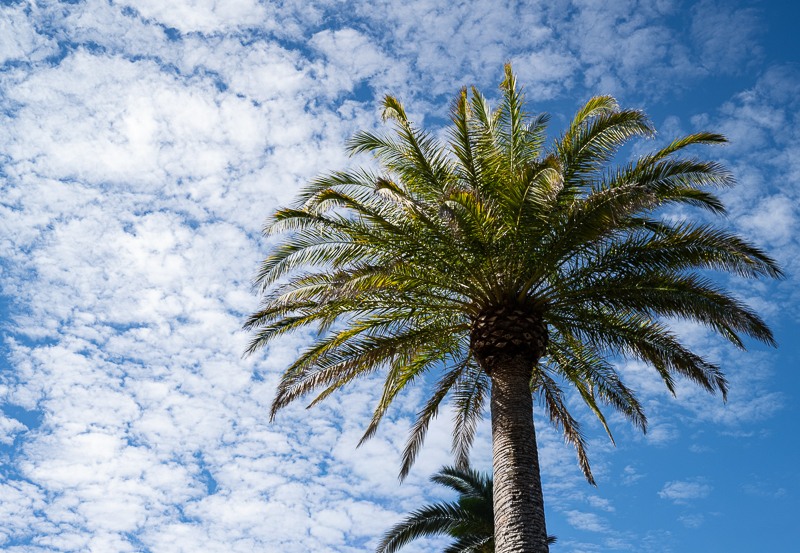
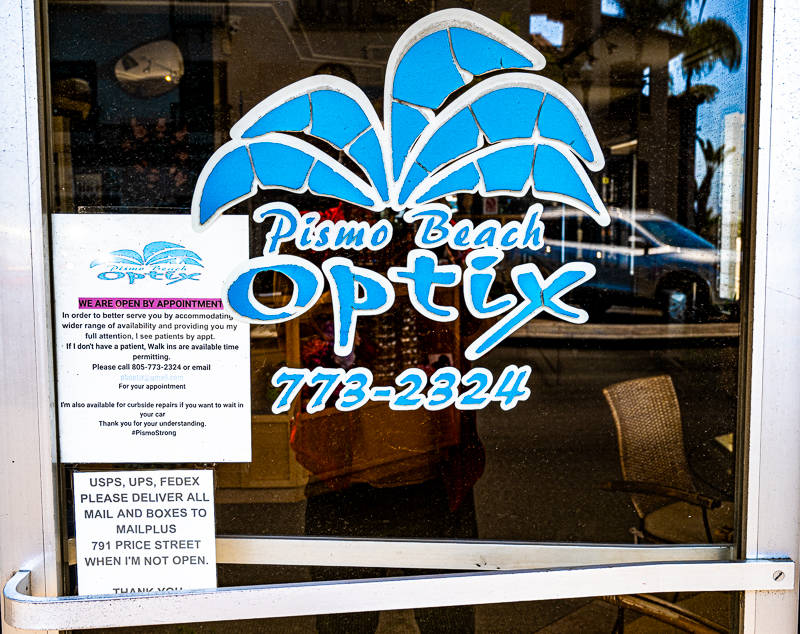
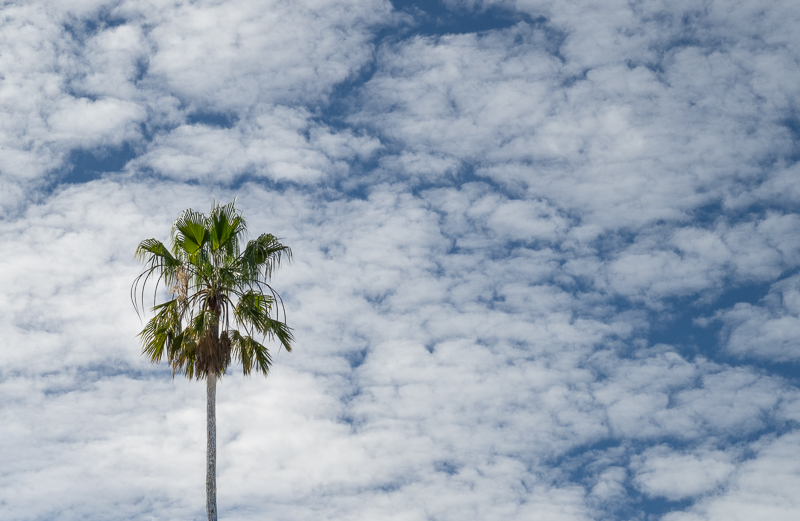
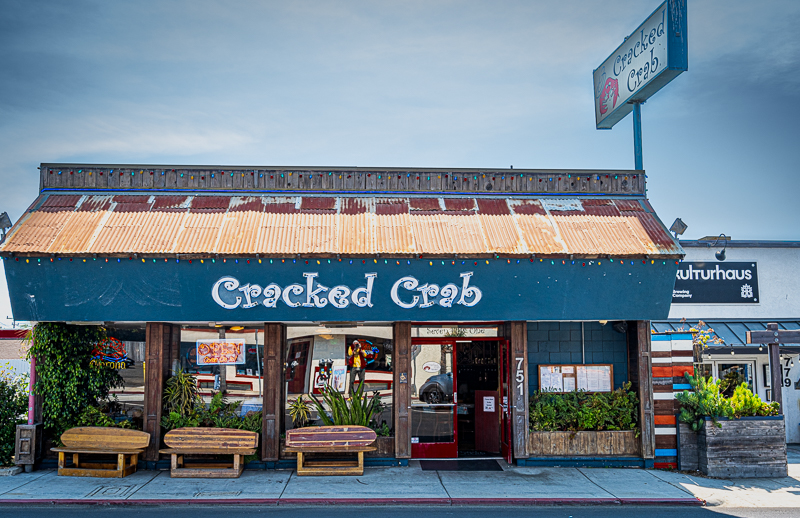
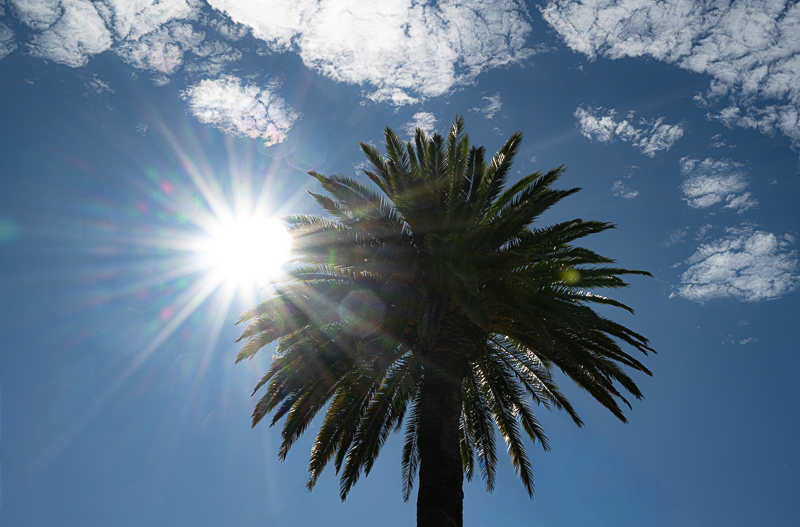
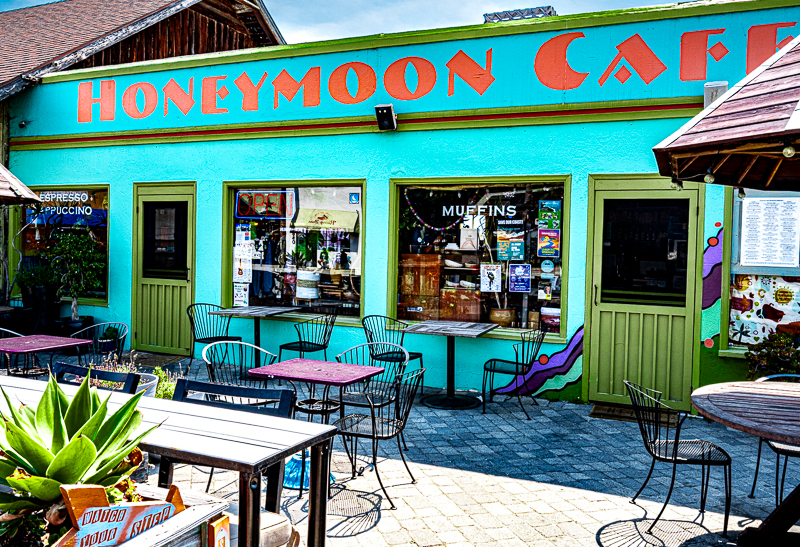
While the psychic on one side of the street beckons clients into the unexplored realms of their “past, present & future,” across the street “Ed” and his “me” invite others to a cheeseburger and fries while Giuseppe entices his with “prosciutt’,” some “muzz” (prosciutto and mozzarella), nonna-style meatballs and, most certainly, invitations and raffle tickets for the annual dinner-dance at Pismo’s Italian American club. (As I write this I can hear Connie Francis bellowing out “Torna a Surriento” throughout a dimly lit dance hall.) The various shades of reds and blues, the turquoise walls punctuated with deep coral signage at the “Honeymoon Café” represent a similar penchant for the discordant, at least as far as color schemes are concerned, schemes that somehow blend perfectly in this peaceful environment, so far from the dictates of metropolitan taste. The plethora of palm trees, real and designed, that line the streets, along with the art deco that beckons to another time –to a reality anchored in its immovable “then”… all of this seems to tell the story of a culture that is blissfully oblivious to many of the vagaries that make life in the mainstream challenging, if not stressful.
These are no doubt the daydreams of my “cracked crab“-apple of a mind, but it is how I came to reconcile the various aspects of (what was for me) a world that seems somehow enchantingly marooned in a certain remoteness, in my distant reveries.
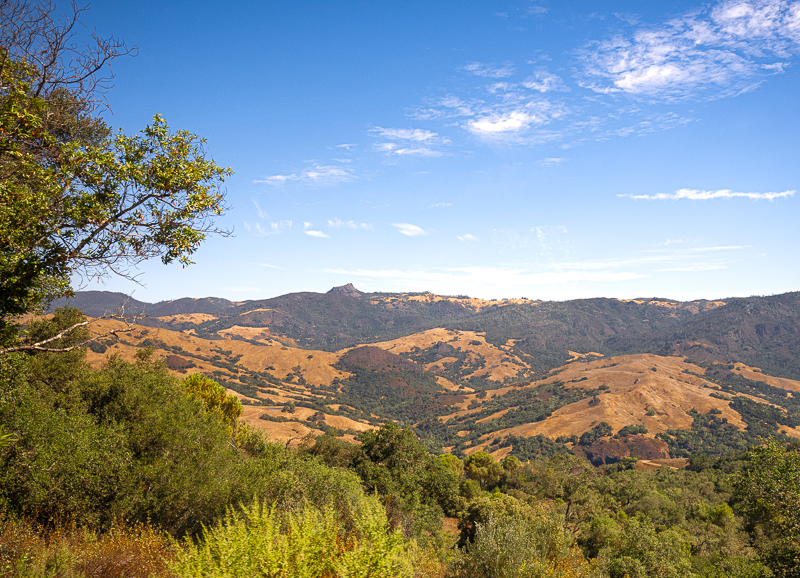
Other aspects of the trip seemed to reenforce these impressions. Hearst Castle seemed weird to me. The ancient, medieval and renaissance European art transported from Spain, Italy and Egypt to Hearst’s 250,000 acre cattle ranch in the Santa Lucia mountains via some early century antiquarian on the upper east side of Manhattan seemed oddly misplaced in an otherwise pristine central California setting, with its oak-studded golden brown rolling hills populated still by remnants of the zoological menagerie –zebras in particular– Hearst set up on his estate. The unique blend of elements and styles, the displacement of this mansion vis-a-vis the more obviously gilded setting of the castle’s cousins in the northeast –think of Newport, Rhode Island, for instance– all made for something of a surreal experience. The mustard and ketchup and the cheap place settings on a finely sculpted hardwood table, next to silver candelabras and in front of ancient European tapestries seems to say it all.
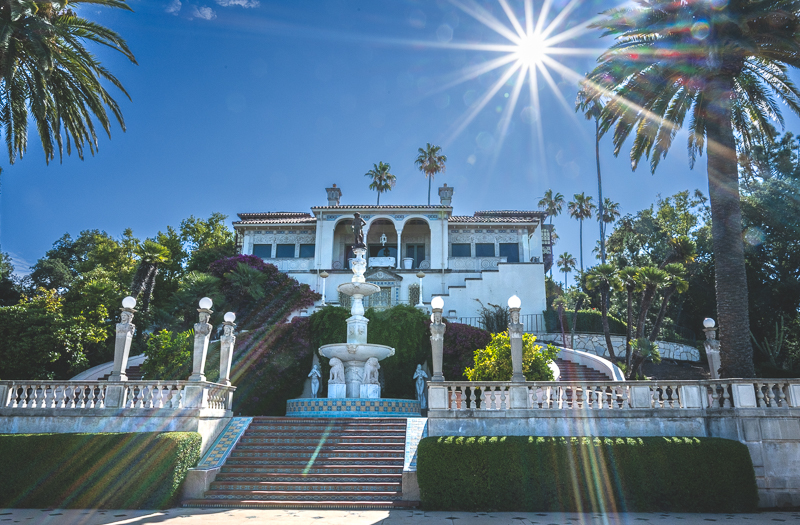
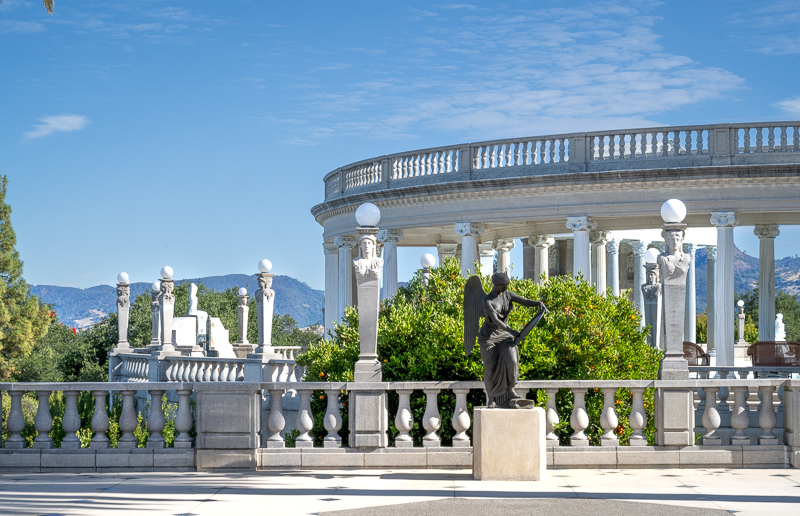
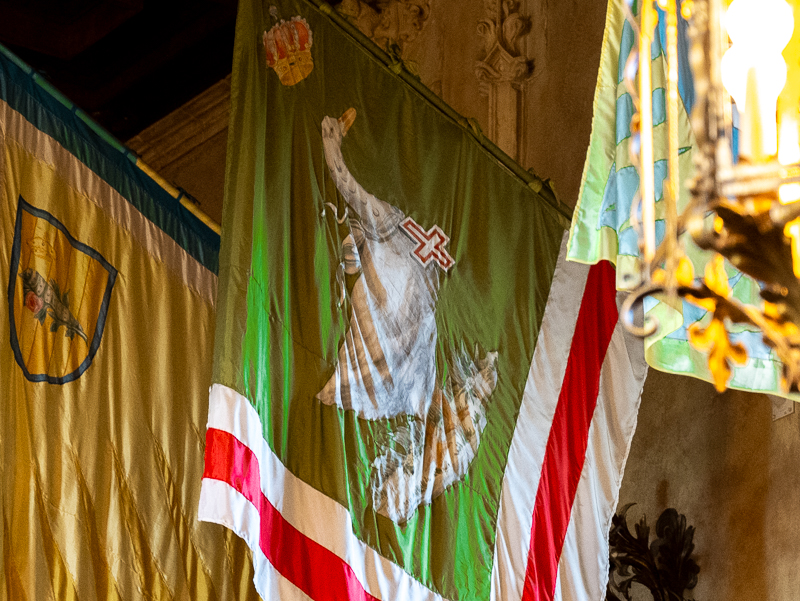
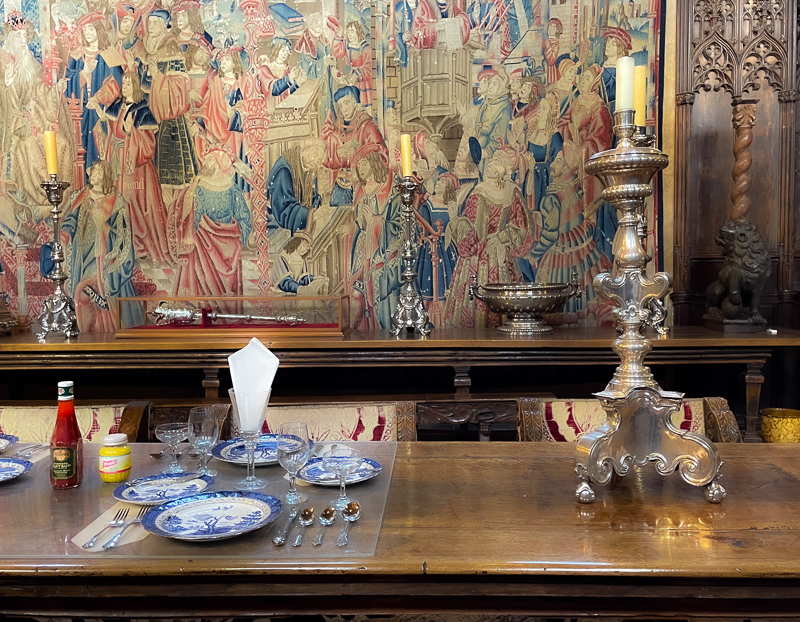
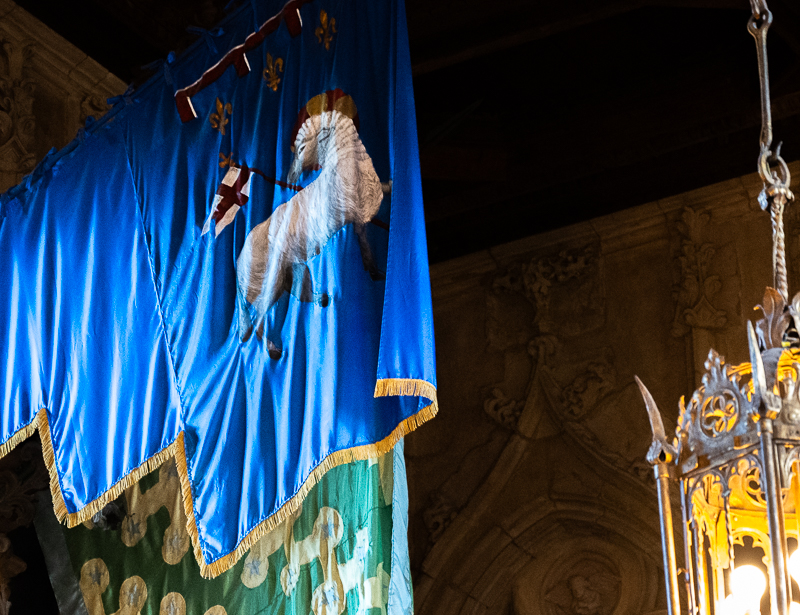
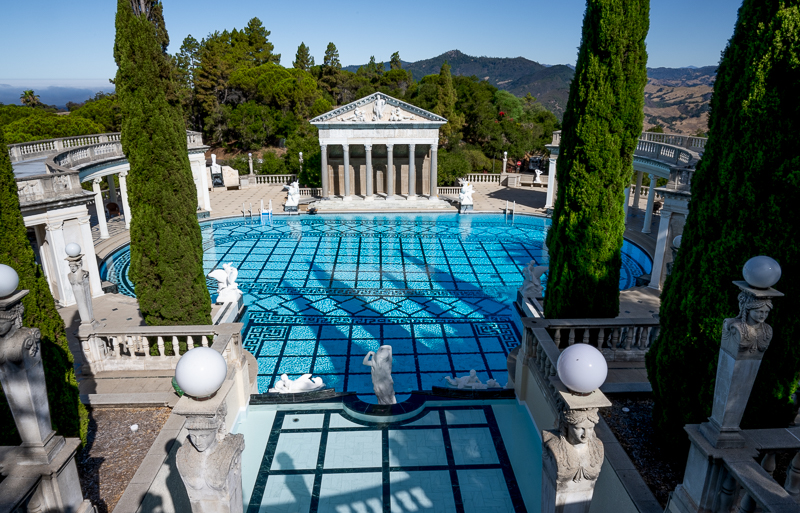
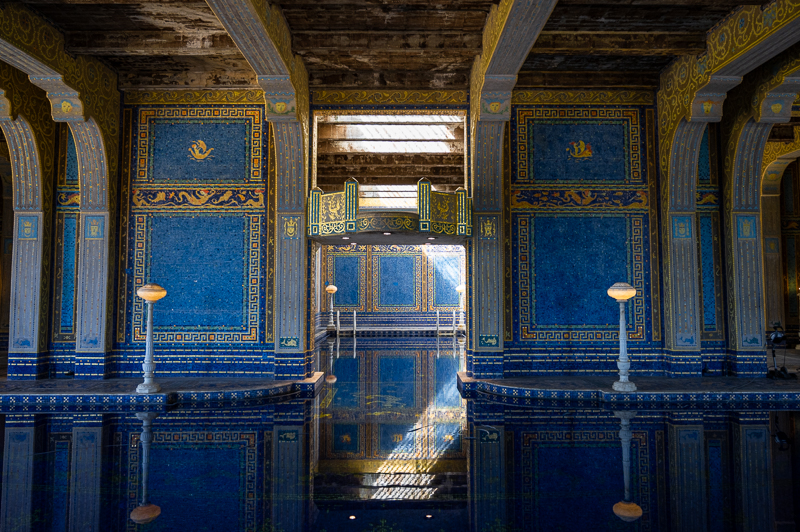
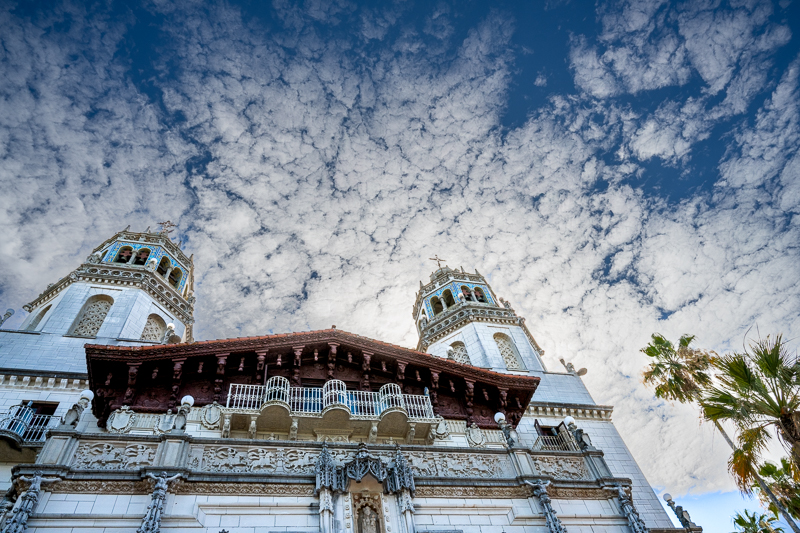
All of what the tour guide explained aimed to make us marvel at the power of wealth, of the ability of rich white men to mold reality according to their personal whims, to elevate their own shrines in some remote desert. The fact that the casa grande portends to evoke the urbanism of a medieval European town –its cathedral-like neogothic (“renaissance revival,” we are told) facing onto a beautifully landscaped open plaza sans its weekly markets or peasants loitering in the corners is a poignant indication of just that. A shrine to the repulsive economic power the American nouveau riche aspiring to the status of an (unbeknownst to them) highly cultivated European aristocracy. None of this –not one of the Hispano-Arabic ceilings, the banners from Siena’s palio, the tapestries or the many other works of art– was explained with any regard whatsoever to the historical or cultural relevance of the items. Only the age, value, and (unfailingly) unparalleled magnitude of this artificial miniverse, details in their sum crafted to satisfy and no doubt kindle a materialistic appetite. The remarkable Egyptian statues of the goddess Sekhmet, carved from diorite during the period of Egypt’s New Kingdom (ca. 1500 B.C.E.) and situated prominently by the architect Julia Morgan on the esplanade, were presented as “remarkable” for being so very old –just think! they were carved at the time of Moses!– and for being of an exceptionally hard stone (harder than diamonds!). What these images actually represent for the Egyptians, why R.R. Hearst might have been attracted to them, what they tell us about art history or Hearst’s or Morgan’s esthetic taste, about the formation of art collections (and museums) at his time, or –God forbid– about the transnational migration (read: robbery) of art works over the past several centuries: none of this was worthy of mention.
When, in the cinema, I asked our cinefile guide what Hearst thought about “Citizen Kane,” speaking out of two sides of his mouth he told me that Hearst never saw the movie but that he nonetheless banned it from his estate and, anyway, the movie really “has little to do with him.”
As far as I could glean, the only commonality that this monument to unbridled American capitalism seems to share with the central California coast is its apparent isolation, much less blessed than that of the surrounding coastal communities. We left Hearst Castle and meandered 10 minutes north to hang out with one of them: the elephant seal rookery, a decidedly more “real,” satisfying and comprehensible experience.
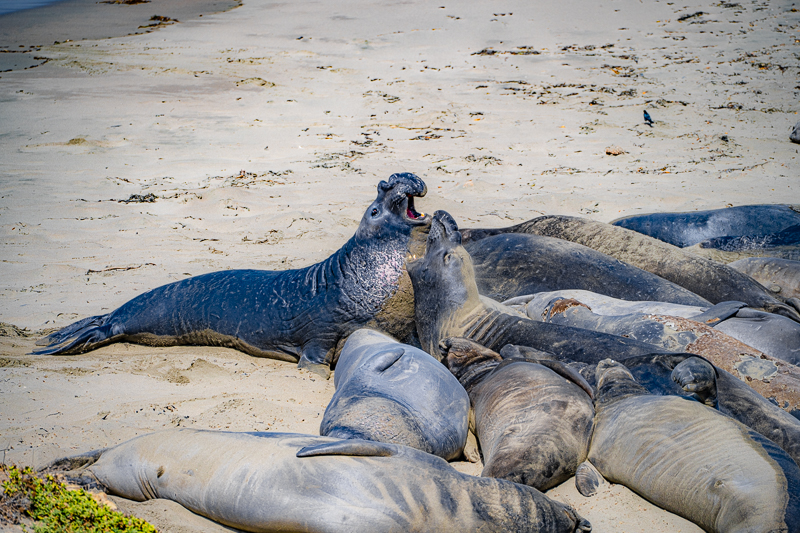
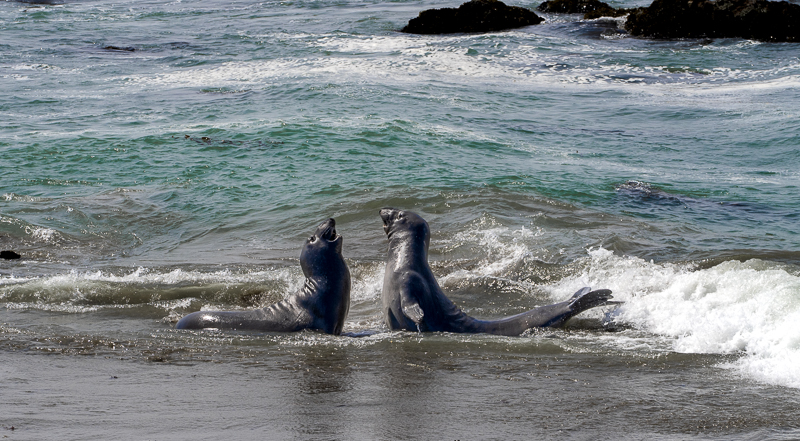
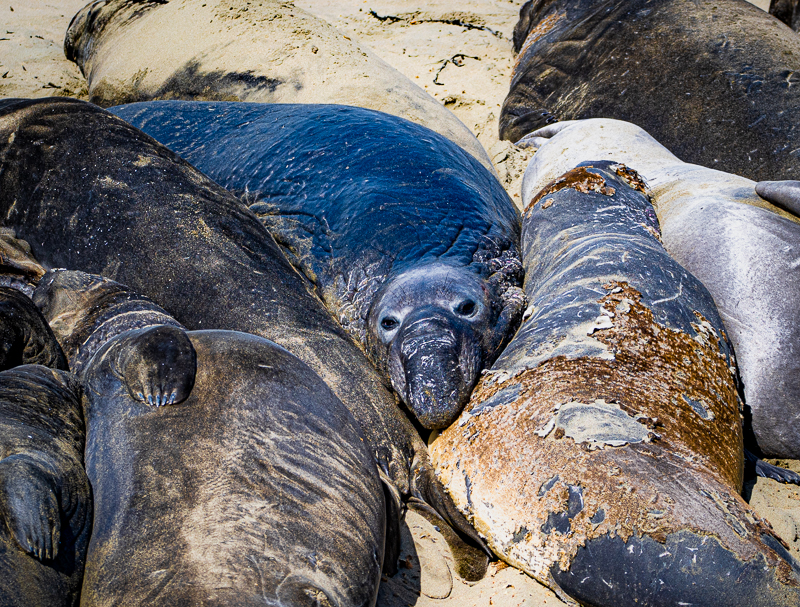
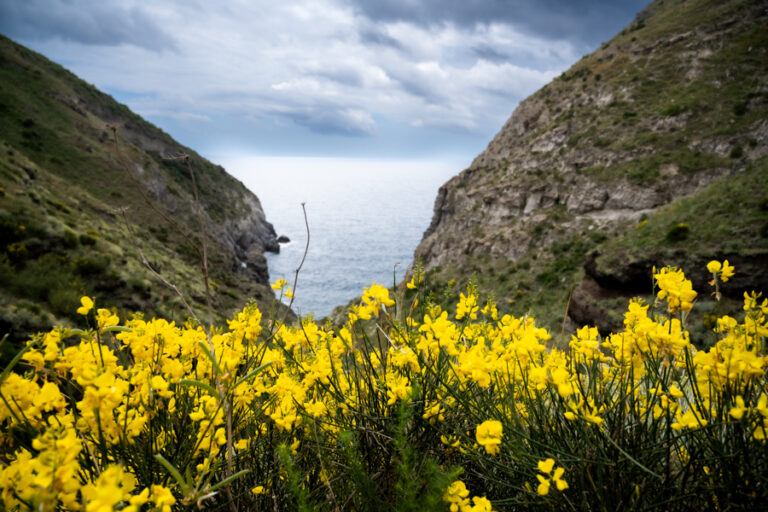
Nature, in fact, rules supreme in this corner of the continent, and it is that unique quality of California’s coastal ecology that I find so compelling. We stopped to check in on our avian buddies at Morro Bay’s Heron and Cormorant Rookery …
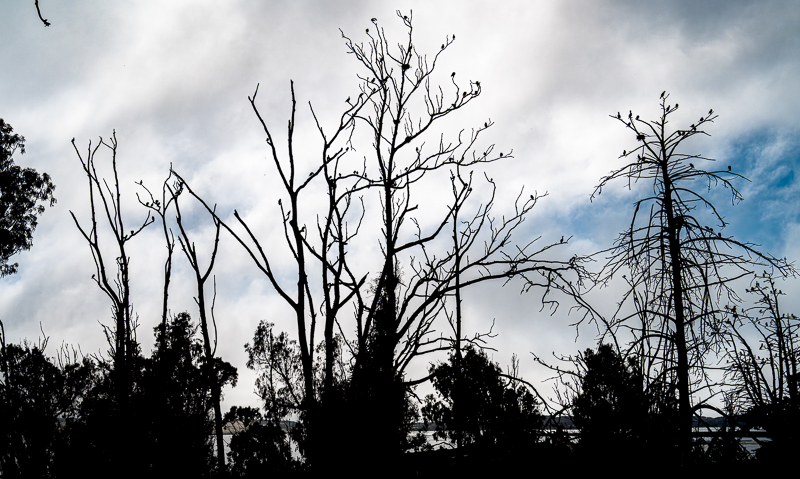
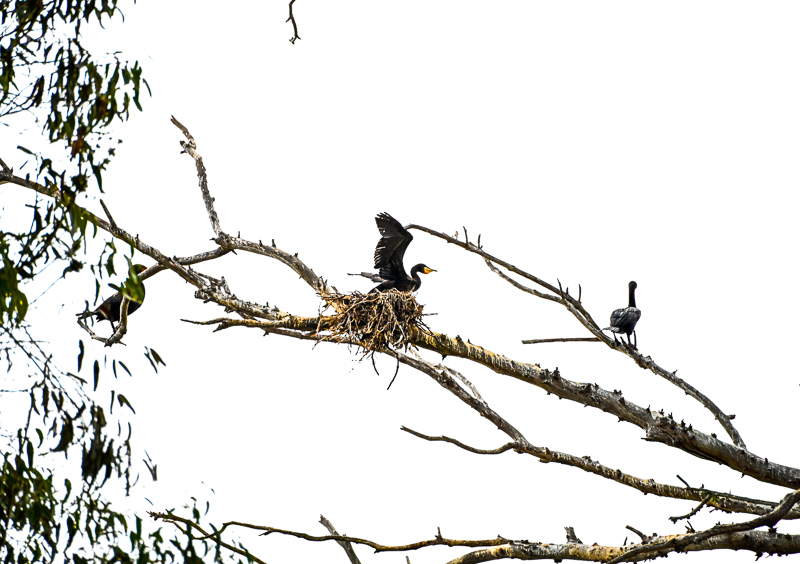
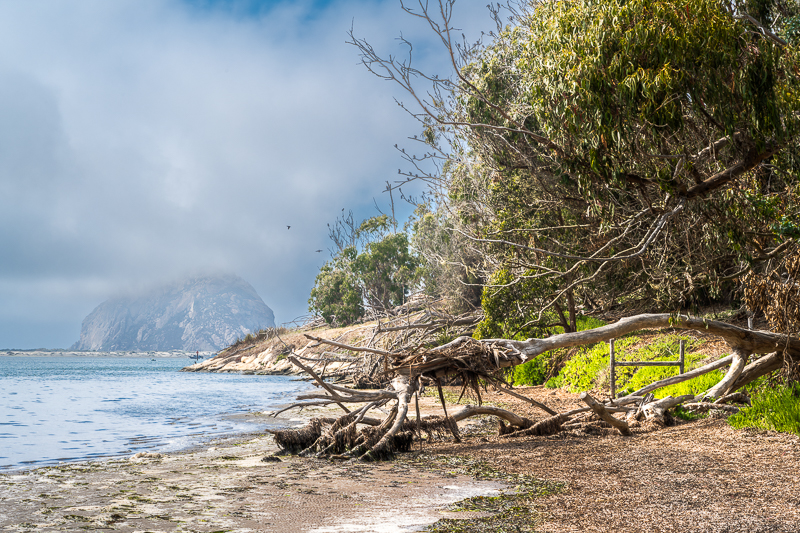
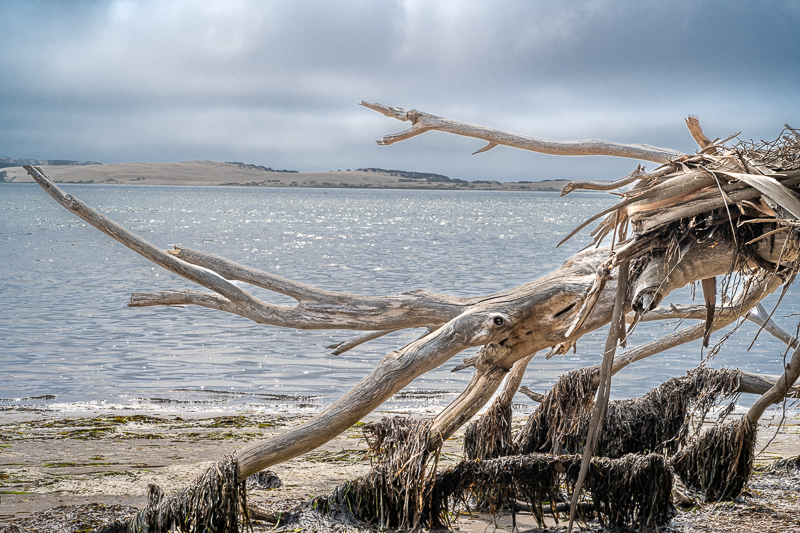
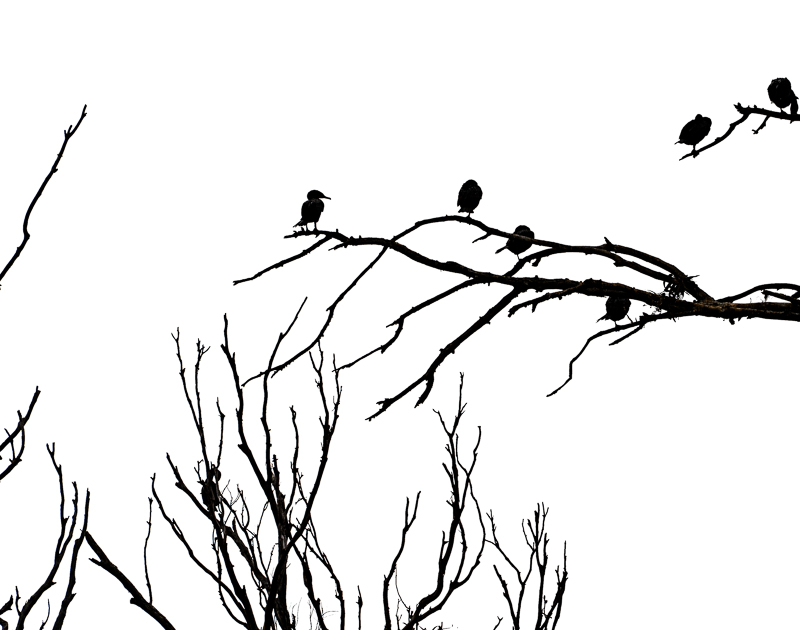
…before heading out to enjoy the views from Morro Rock.
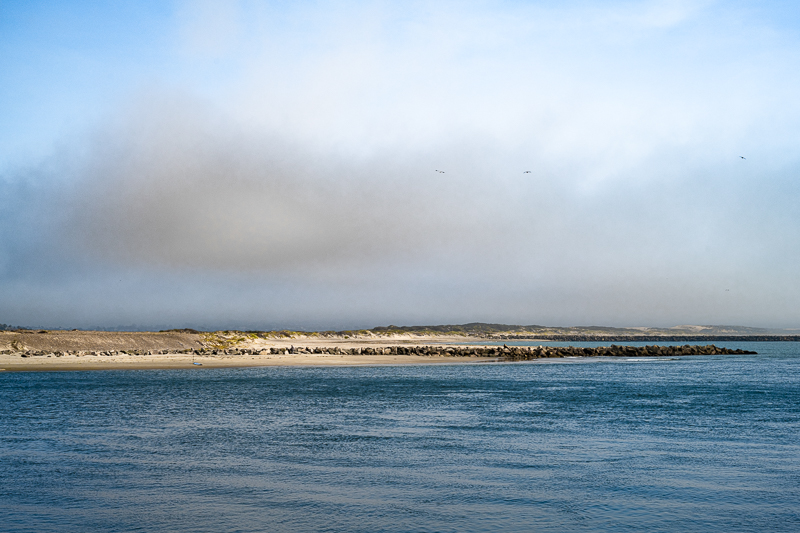
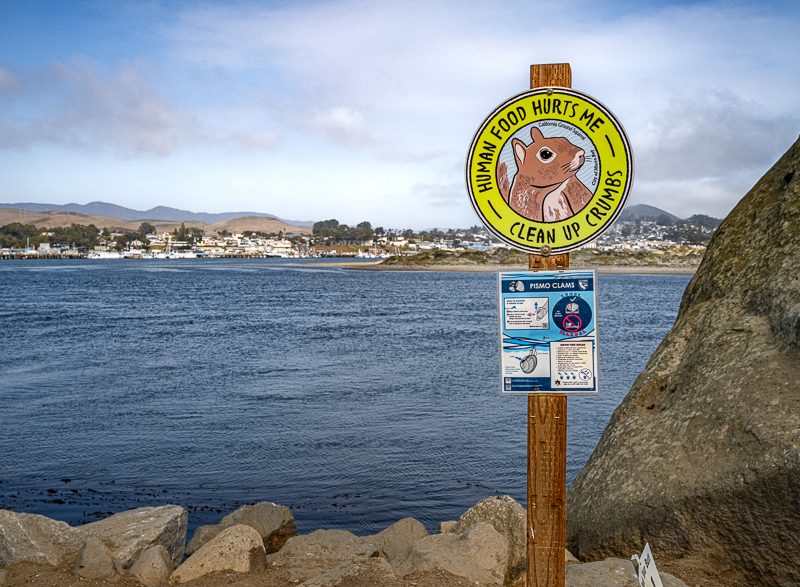
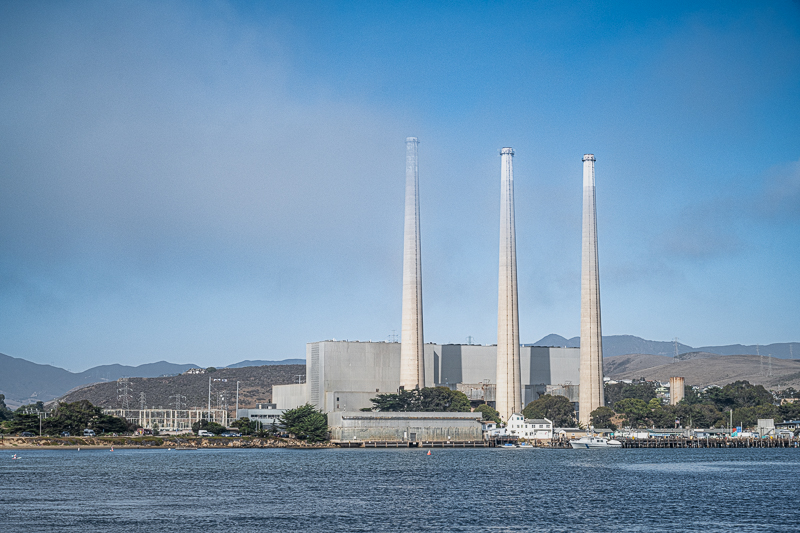
We proceded on to Cambria, in time for a late-afternoon/sunset walk along the cliffs at the Fiscalini Ranch Preserve.
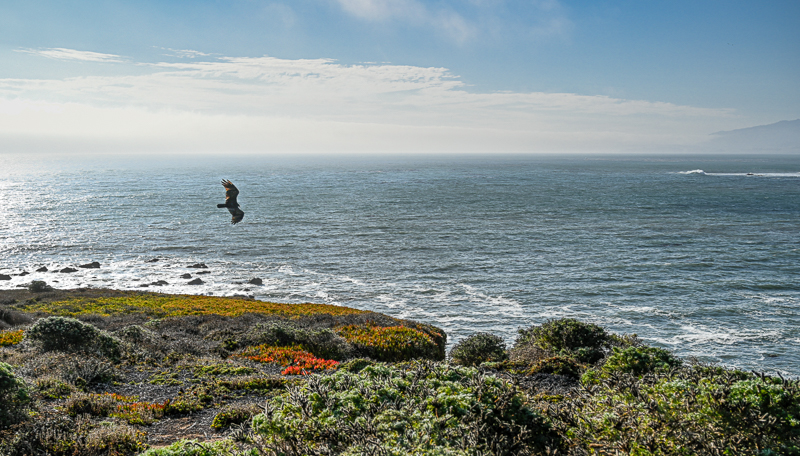
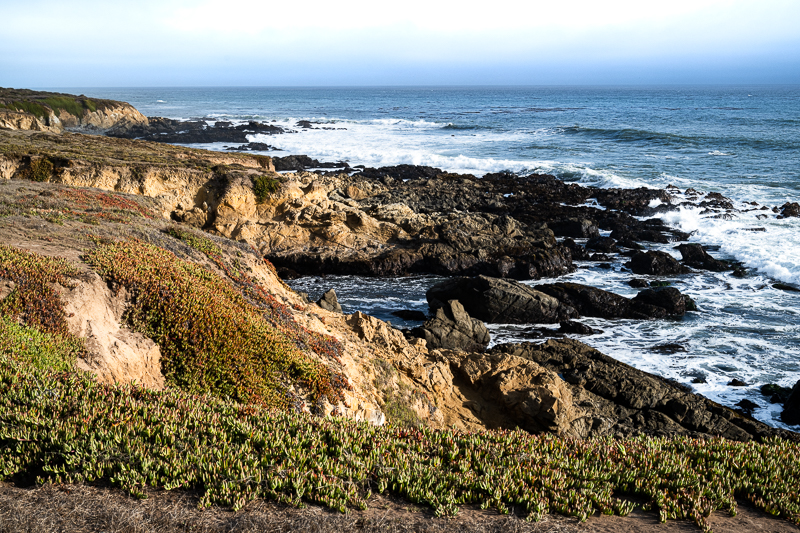
The melancholic lament of the harbor seals lolling, huddling, playing and slithering on the rocks below seemed to lend some sort of mythic quality to our sense of ourselves as questers in the land of the setting sun.
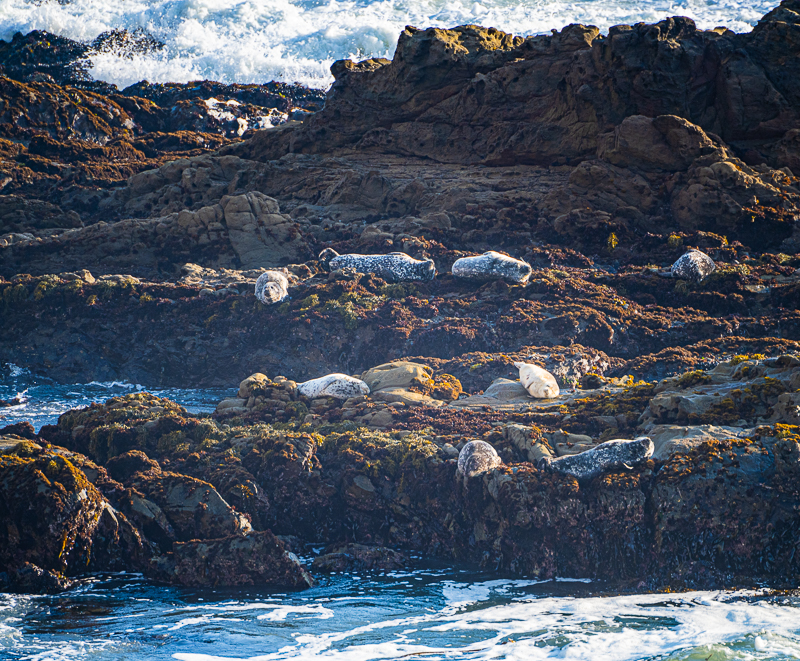
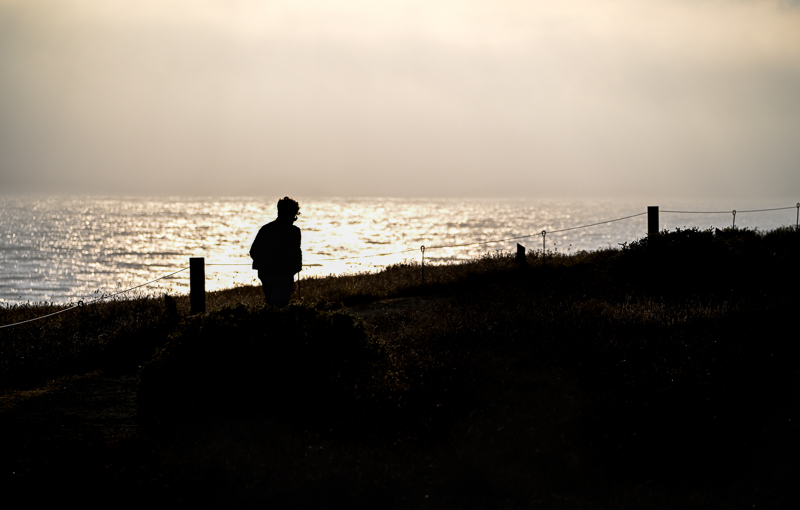
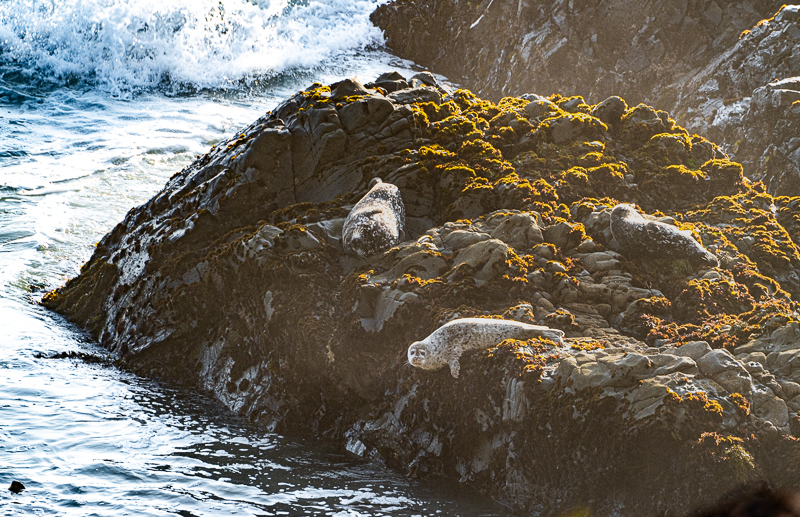
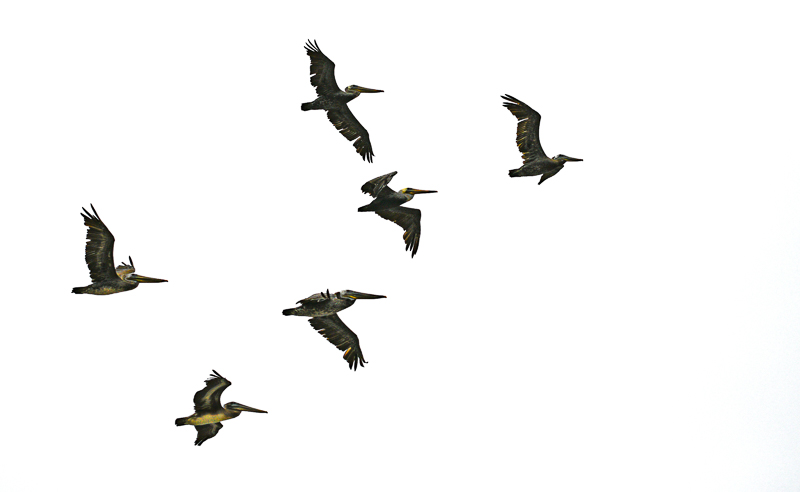
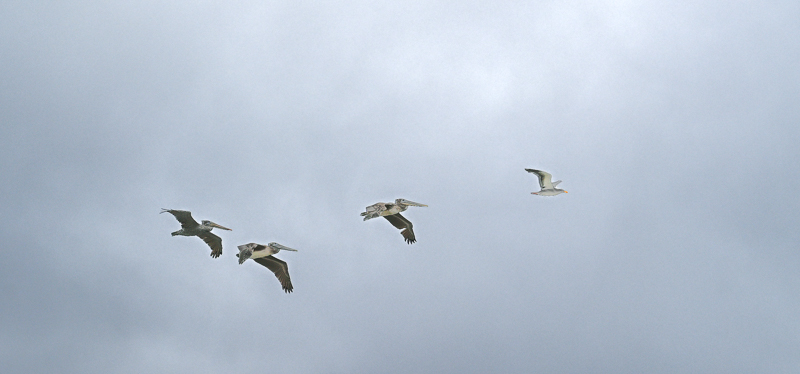
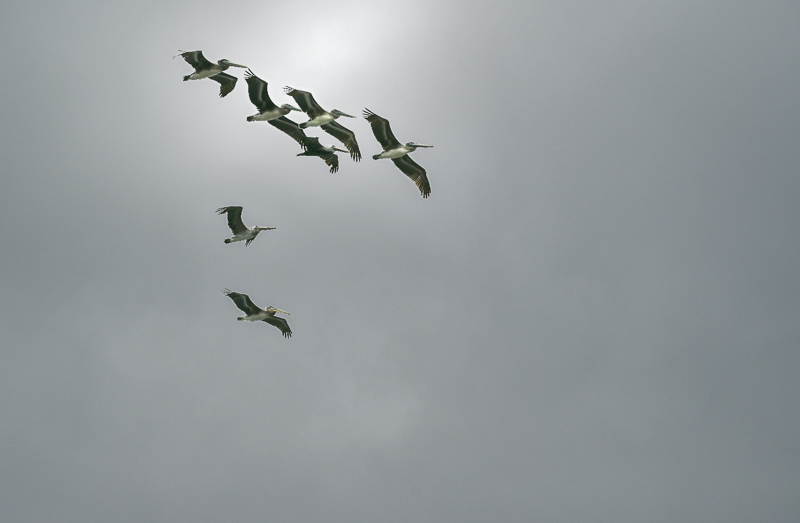
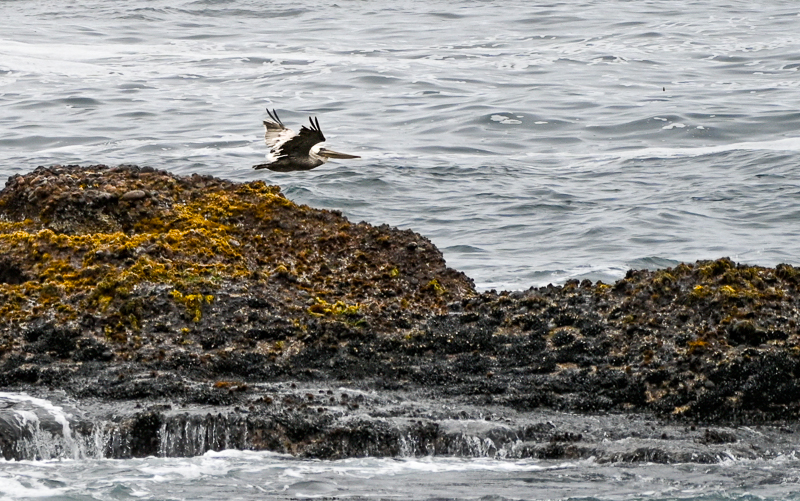
Our communion with nature was crowned by our detour the following day, en route from San Simeon to San Francisco, to Point Lobos, a site very dear within my personal memory bank. The ongoing spectacle of Brown Pelicans flying north along the coast, now soaring, now planing low just above the ocean surface, captivated me to the point that beauty of all else at that point seemed secondary.
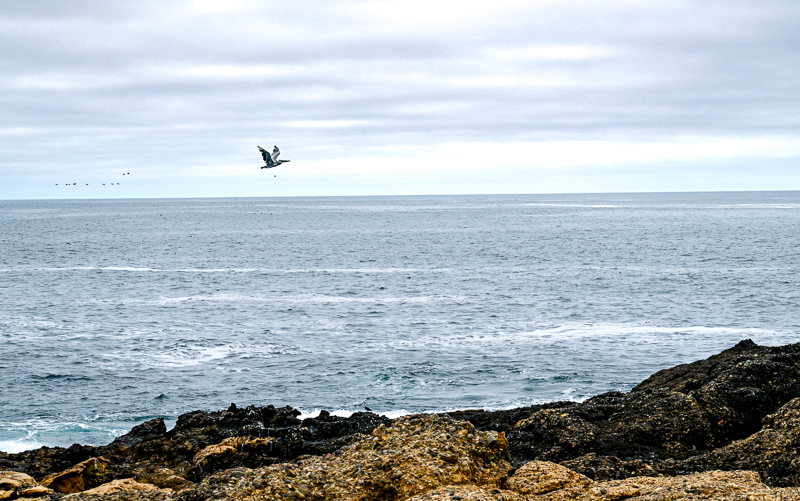
In its various dimensions this journey north has brought to my mind once again how much place can constitute a core threshold –a limen– of our being and identity. I think of the wonder that the sunset over the Pacific Ocean produced in me as a child, and I remember how I mourned not being able to experience those sunsets when I moved from the west coast to the east. Truth be told, I have come to appreciate the sunrise while recognizing that our early-life experiences with place, nature and family are uniquely formative.
More photos from this trip available on Flickr at: https://flic.kr/s/aHBqjCrxi4


Preciosas fotos y mejor texto. Imposible que no me venga a la memoria el viaje que realizamos por esa costa hace unos años gracias a tu consejo y que no te lo he agradecido lo suficiente. Un fuerte abrazo amigo.
Gracias a ti, Jota, por acompañarnos en tantas aventuras… ¡habidas y por haber!