Labor and construction: Ben & José

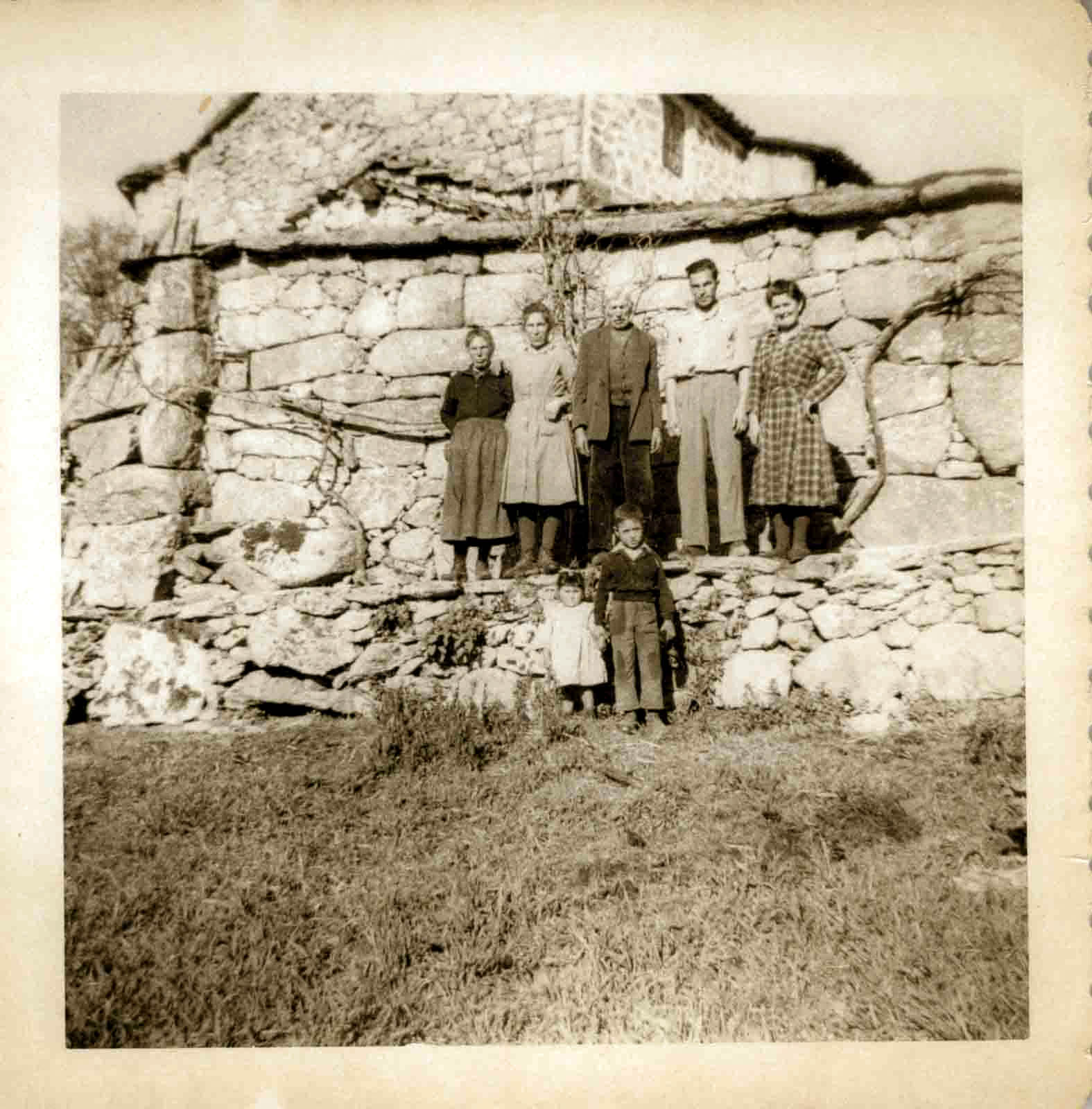
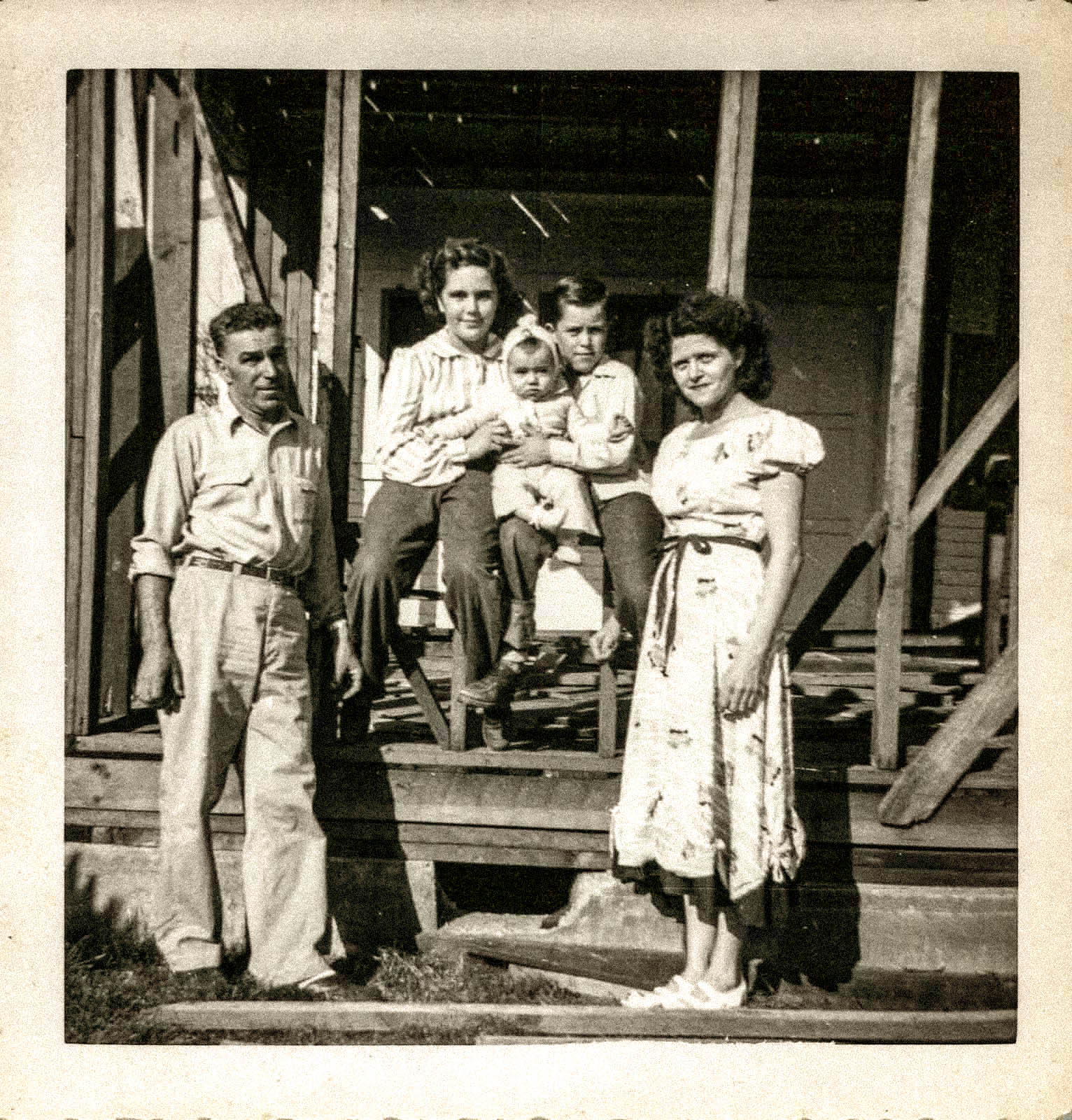
On the left is a photo of the painting “Bricklayers,” by Ben Shahn, completed in 1951. On the right, a cropped image of my father taken that same year. You see him leaning here against the 2×4 frames of his addition to our house in Lomita, California. The uncropped photo below shows him posed next to the family that he was also building back then, it too with a new addition. My father was driven by a certain passion for adding on to the homes he lived in for much of his life. Adding on to the family stopped with me in 1950, his passions notwithstanding.
Labor and construction: these are the threads that tie these images together, threads that are uniquely meaningful in the context of the mid 20th century.
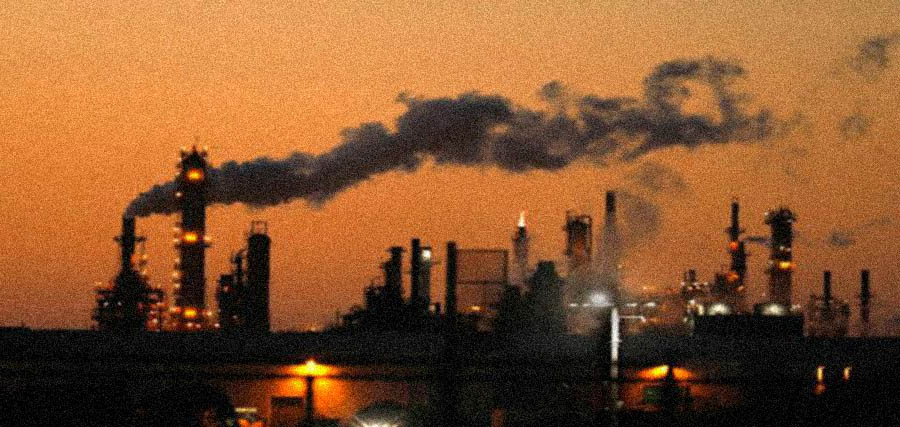
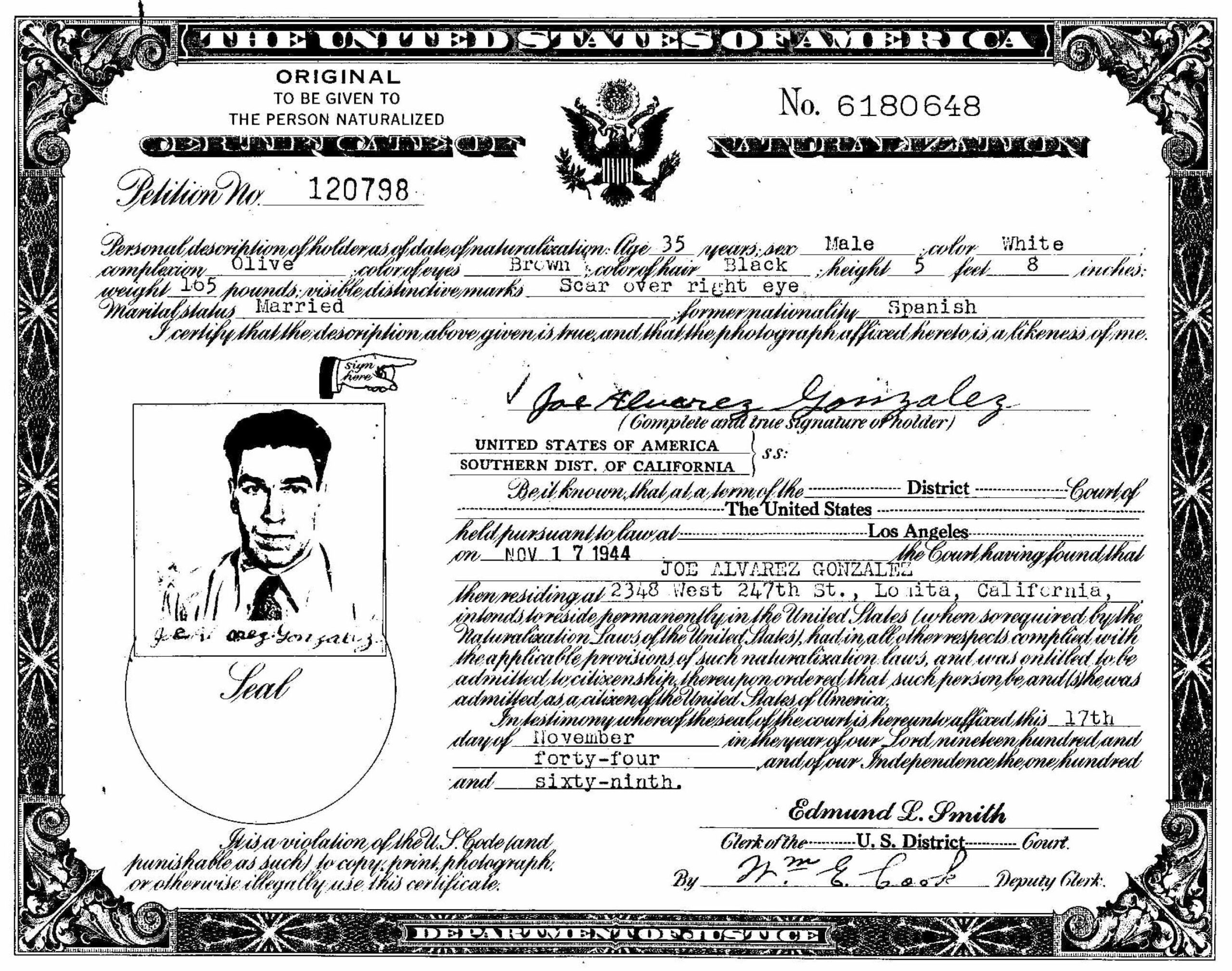
For most of my childhood I was immersed in the world of labor of one type or another, and yet that world remained something of a mystery to me. My father worked for years as a steamfitter and welder at the Union Oil Refinery in Wilmington, California, 20 minutes from home. He learned the trade before I was born, through adult evening classes at Banning High School. This came after years of bouncing from sheep camps to mines (Northern California and Nevada, 1920s and 30s), from one factory to the next (Los Angeles, 1940s). He welded in hulls of battleships on Terminal Island during World War II (his net gain: progressive hearing loss). He entered into a brief, ill-fated business venture managing a small beach-side café in Playa del Rey. Dad might have been swindled in this one, and, anyway, beaches and business were by no means his thing. It was a time of considerable uncertainty, so I was told, compounded by his having snuck into the country from Mexico in the 1920s without bothering to “naturalize,” as they put it (!), until 1946. I’ve never figured out how it was that defense industry contractors failed to catch this… or maybe failed to care. Nor was I able to understand fully what hardship really felt like back then. We seemed to have everything we needed as I was growing up. Hardships must certainly have littered dad’s path from Spain to California via Mexico and Nevada, the last stage with wife and children in tow. My dad really never spoke about hardship, however. It wasn’t in his nature to feed me those stories. Maybe he preconditioned my tendency to view the glass as half full and not worry too much about the missing chapters, despite my natural curiosity.
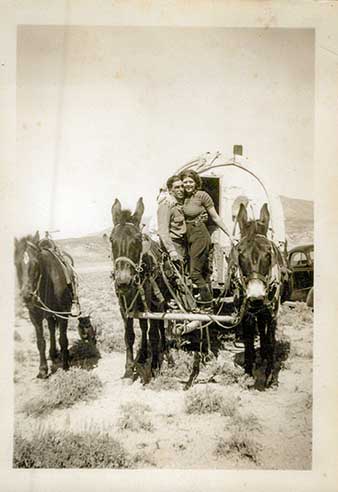
Mom and dad met while dad was working out at the sheep camp with Basques, near Eureka, Nevada. The café in Playa del Rey (in the early 1940s) where mom and dad worked briefly.


Mom, my sister Carmen (9), my brother Dale (7), and dad –his shadow at least– in 1948. Mom first rattled down this highway in an old pickup truck in 1940, baby and toddler on board, en route to join her husband in Los Angeles, where he had migrated earlier in search of work. Highway 6/395 crossing the Mohave Desert became an iconic part of my childhood owing to our yearly jaunts “back home” to Nevada. Letters in mom’s trunk along with stories I heard confirm that mom’s first trip down that road in 1940 was a rough one.
I came to understand nonetheless that numerous potholes had indeed filled his early path forward, some of which were precarious. Jobs were scarce. Landlords commonly refused renting to families with children. Remittances dried up when children came along, prompting dad’s oldest brother, in New York at the time, to step in with financial support needed by the family back home in a war-ravaged Spain. All of this, moreover, when deportation orders were served. I got portions of the story from a treasure trove of documents my mother painstakingly saved and archived in the trunk her father had brought from Italy in 1887. (It took me 17 years after her death to face opening that trunk!). Other details came directly from her viva voce, the inveterate storyteller who –outwardly, anyway– was the more anxious of the two. She was also more proactive, for it was she who initiated the naturalization process once she learned that her husband and the father of her two children was undocumented. (Another “how could that be…?”) My father was outwardly carefree and impervious to danger or predicament. I remember him telling me in his matter-of-fact tone about the moment a steel beam came plummeting down next to the scaffolding he was standing on, grazing him along the way. It didn’t kill him, he proclaimed, simply because “it wasn’t his time.” His tone unnerved me. Paradoxically, it also filled me with an inexplicable sense of awe.
One topic about which my father was anything but matter-of-fact concerned the pivotal role his learning a trade and joining the labor union had for him and for us as a family. On this he waxed eloquent and with a conviction that was his badge of distinction. Looking back, my reaction to his conviction was not dissimilar from that of an agnostic baffled by the rock-solid faith of a believer. In some way, I wondered, with the limited powers of my childhood imagination: How could anyone be driven by such a rock solid faith in such an uncertain world, on the heals of global destruction and with Armageddon lurking beyond the next classroom drop drill and in the shadows of the quonset hut air raid shelters we passed en route to school. My mother, by contrast, seemed driven by a more realistic sense of cautious skepticism in her dealings with people, situations, life. I can see now just how much comfort I took in the earthiness of her outlook and approach. A dose of realism that simplified things, this realism being the source of what complicity I shared with her. The glimpses that I recall grasping of my father’s faith in labor unions waiver in my memory between the ethereal and the comedic. Although they correspond to what at the time seemed to be mundane threads of everyday life, life has taught me to intertwine those threads into the tapestry of national and world history, one that is far more complex than I could realize back then.
One such thread concerns dad working “at” the Union Oil Refinery on Anaheim Boulevard in Wilmington, California, even though he returned home each day with a pink and white “Burke and Reynolds Local 250” badge pinned to his bib overalls. The “Steamfitter and Welder’s Union” that he apparently worked for was something else, somewhere else: not in Wilmington. Only later did I gain a better understanding of the relationship between union management and membership. Words adults wielded freely when discussing these things left me in the dark. “Strikes,” “picket lines,” “scabs,” “lay offs,” “sub pay,” “union dues,” “halls” and “meeting”: such terms were the shards of an opaque window. Those shards began to coalesce the day I retuned home from downtown Lomita to report to my mother having chosen the “non union” over the “union” barber shop. I still remember struggling to make sense of those signs in the shop windows. My mother’s reaction was instructional: “Oh, don’t tell your dad!” Fortunately I had years ahead to atone, best of all without dad ever knowing. As an adult I think on that moment in particular as a lesson in how global dynamics play out on the most intimate stages of our social interactions as families and communities. For me, this was a lesson in commitment and solidarity, one that has illuminated my path over time and that guides me today through a world beset with much darker mysteries.
Of all such childhood mysteries the darkest of all was the refinery where my father worked. Maybe had I seen it on the inside with my own eyes, the space where he welded and soldered, the people he mingled with, the store where he would buy me the Mars Bar that he brought home in his lunch box… maybe some of this might have humanized to a degree something that remained vaguely frightening. Maybe I wouldn’t have been so terrified by the late night phone call following a window-rattling explosion when his union rep summoned him to an over-time graveyard shift. “Graveyard,” by the way, was yet another one of those mystifying shards, a particularly daunting one indeed. My only connection to my father’s work space was indirect, yet strangely intense. When his buddy dropped him off after work, I would race out to greet him at the curb and carry his lunchbox as we walked hand in hand back to the kitchen. The smell of the refinery that had clung to his clothing would permeate the air. I would conjure the vaguest of images of what might lie behind that smell. And the smell and its images have proven indelible.
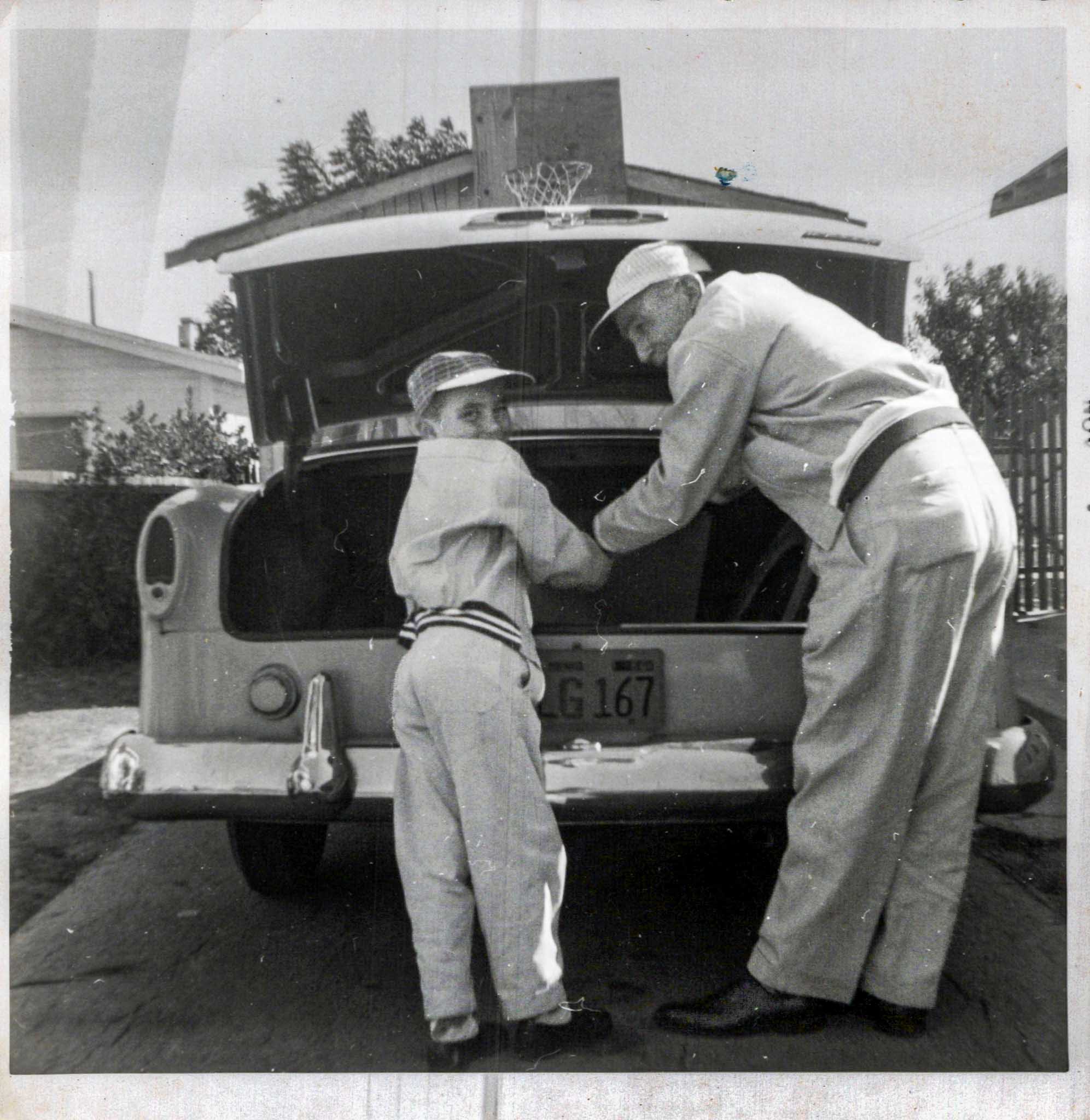
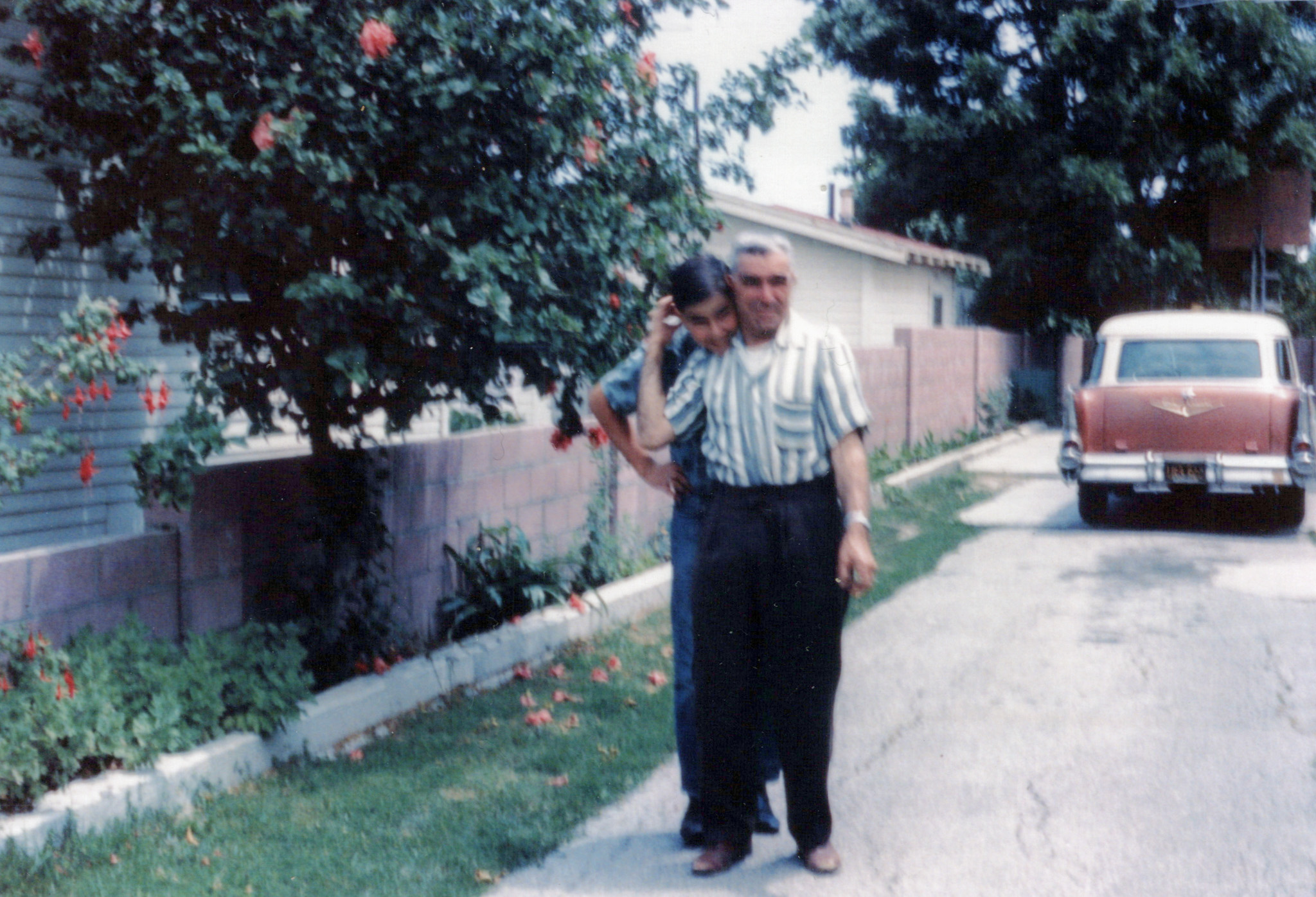
As have my mental snapshots of the street cars that I would study inquisitively during my earliest shopping trips with my parents to downtown Los Angeles. The clatter of those cars as they rattled along carrying so many people through the bustling streets; the buzz, crackling, and sparks produced where the trolley poles connected to the power lines above: memories of these trolleys and, indeed, of the city’s entire early-century public transportation grid form the shadows of an an old-world, exotic Los Angeles that disintegrated during my childhood. It succumbed to the refinery-driven economy propagated by a corporate alliance, Standard Oil, General Motors and Firestone Tires, that strangled the city with freeways and enslaved its citizens to the automobile. The chicken ranches, strawberry farms and open fields of my home town; the olive groves and orchards that lined San Fernando Valley Road, the main route leading north out the city toward Mohave; indeed the orange groves that gave the neighboring county its name and sweet smell in the spring: the memory of what remained in the early 1950s of a bucolic environment was gradually enveloped in a vertiginous snarl of fumes. The skies grew darker, blotting out the the views of Mount Baldy. The air began to sting my throat and I had no idea why. As the memories of LA’s preternatural beauty faded, the role the refinery played in all of this grew progressively clearer.
As a child, I was, of course, oblivious to the politics of petroleum that drove these transformations and contributed to such a hazardous environment. I was probably no more oblivious than many Los Angelenos. It was also hard to see at the time just how much this story would play out over subsequent decades in the many Los Angeleses of the future. And yet, this ignorance notwithstanding, nothing related to my dad’s work computed for me into anything positive except, of course, that it was the source of the economic stability that we enjoyed while I was growing up. What dumfounded me most about dad’s working in this environment was the sense of pride that he expressed for what he did in that place. A man who circumvented the globe in search of the opportunity to raise a family and send his children up and onwards into white collar careers (color-coded collar talk was also beyond me, even though I sort of got the idea) saw the artistry and creativity in his work cutting, threading, bending, welding, and assembling piping and hydraulics in the midst of what seemed to me to be an industrial wasteland with its putrid smoke billowing up into open skies. This pride, however, came not without its inscrutable contradictions. When my older brother was slogging aimlessly through his late adolescence, my father drug him along into the bowels of that behemoth by the ear, as it were, for a fatherly tutorial. I understand that it was dad’s ploy intended to shock my brother into some sort of purposeful agency. According to my dad, the experience had the collateral effect of casting him in what was for my brother a surprisingly positive light. My dad was hardworking, loyal and respectful, virtues that his coworkers admired in him and that an adolescent son is not necessarily wired to appreciate. Dad spoke to me of this episode with a sense of accomplishment and understated satisfaction.

Above: Union Oil’s gatehouse where dad clocked in and out was something of an iron curtain. Dad’s family never went beyond this point.
Right: Prior to the onslaught of the freeways, Union Oil and many other corporate enterprises sponsored media campaigns promoting an exotic, semitropical California.

For reasons that were never completely clear to me my father was not prone to initiating conversations about the family he left behind in his native Galicia when he set out for the Americas at the young age of 16. I recall, rather, my tugging on the shirttails of his tattered memory as much as possible, milking him for stories that would nurture my curiosity about grandparents I never knew, about the boat trip to Veracruz, about his life in Mexico. When the topic arose, he was mostly intent on lavishing profuse affection and unmitigated praise on his mother. Not so much for his father. He spoke sparingly of the man who relished his freewheeling immigrant days sharpening knives in Buenos Aires (work done traditionally by men from the Spanish province of Orense), except to express pride for the house that my grandfather built when dad was a child. “Solid and sturdy as a rock; that house will never, ever come down.” (The previous one had!) My dad’s undying faith in that house was akin to his enduring trust in the depression era social networks set up by the Roosevelt administration when dad was working in the sheep camps and mines of Nevada. So much was packed into those expressions of conviction, more, I suppose, than I will ever fully understand. In terms of the house in Chaveanciños, it took me years to connect my father’s remembrance of his childhood with his labors constructing his own house and family on the fertile ground of the new world. My treasured memories of staying over the past several decades in the house my grandfather built has no doubt contributed to this awareness.

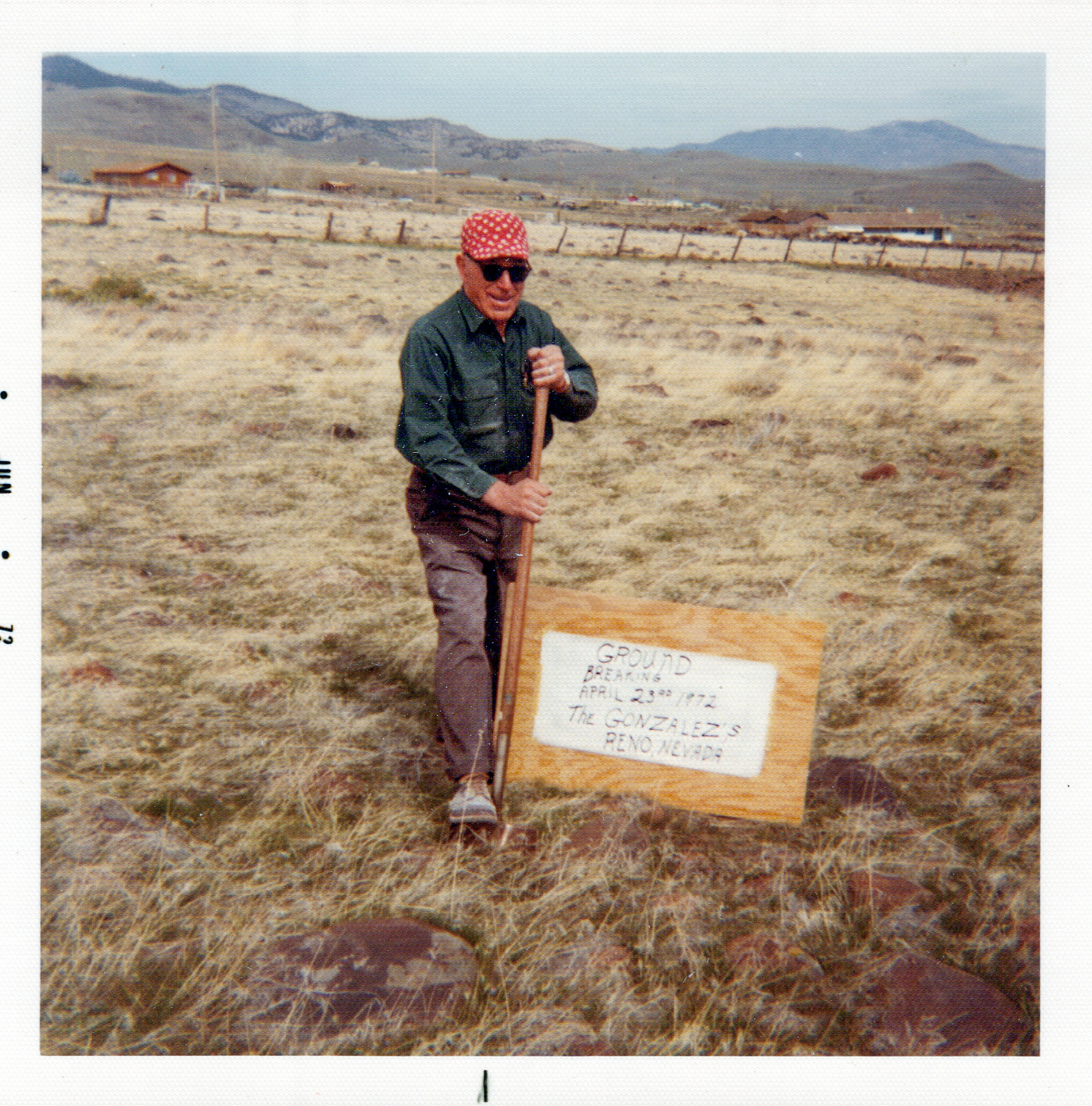
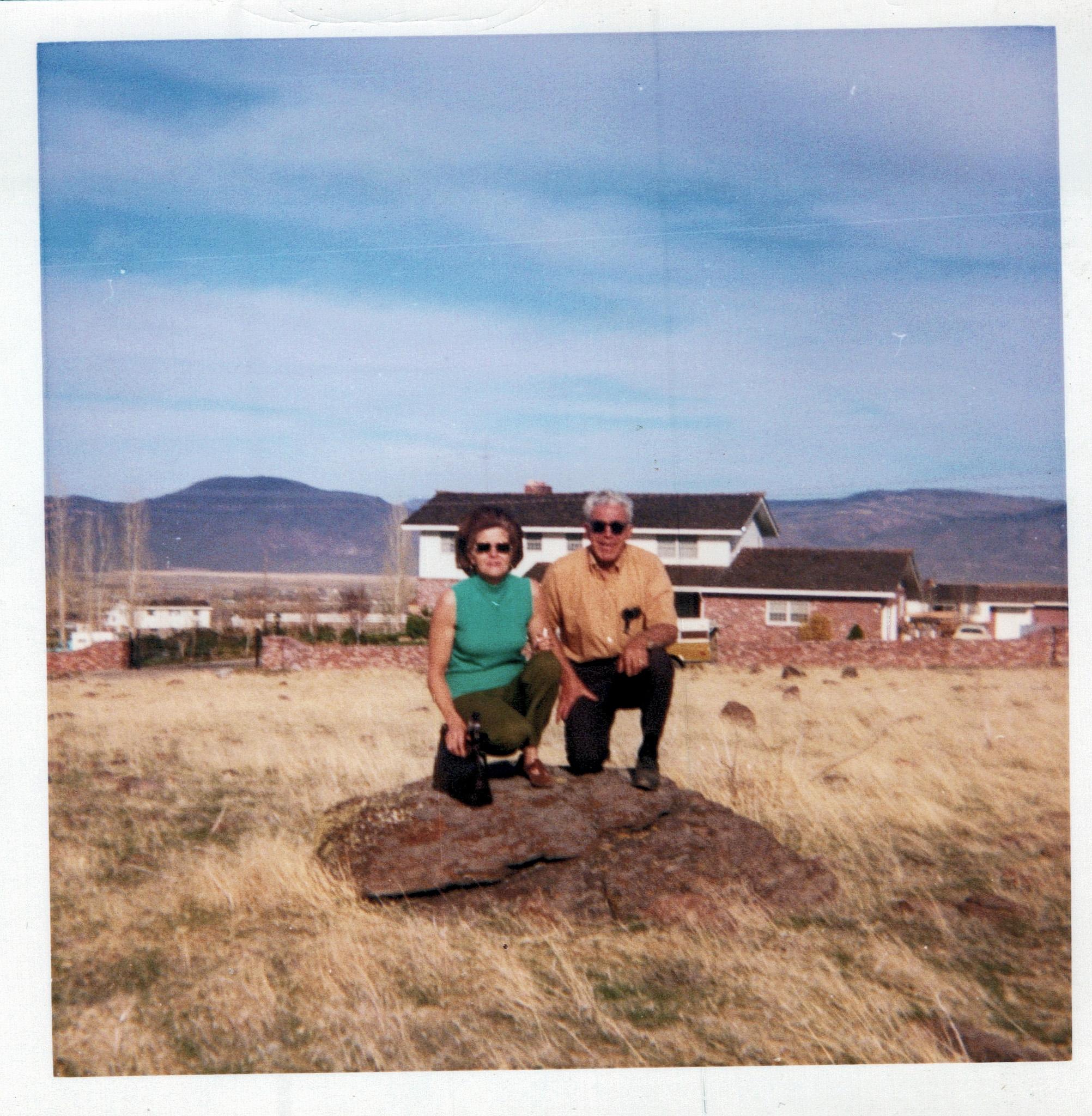
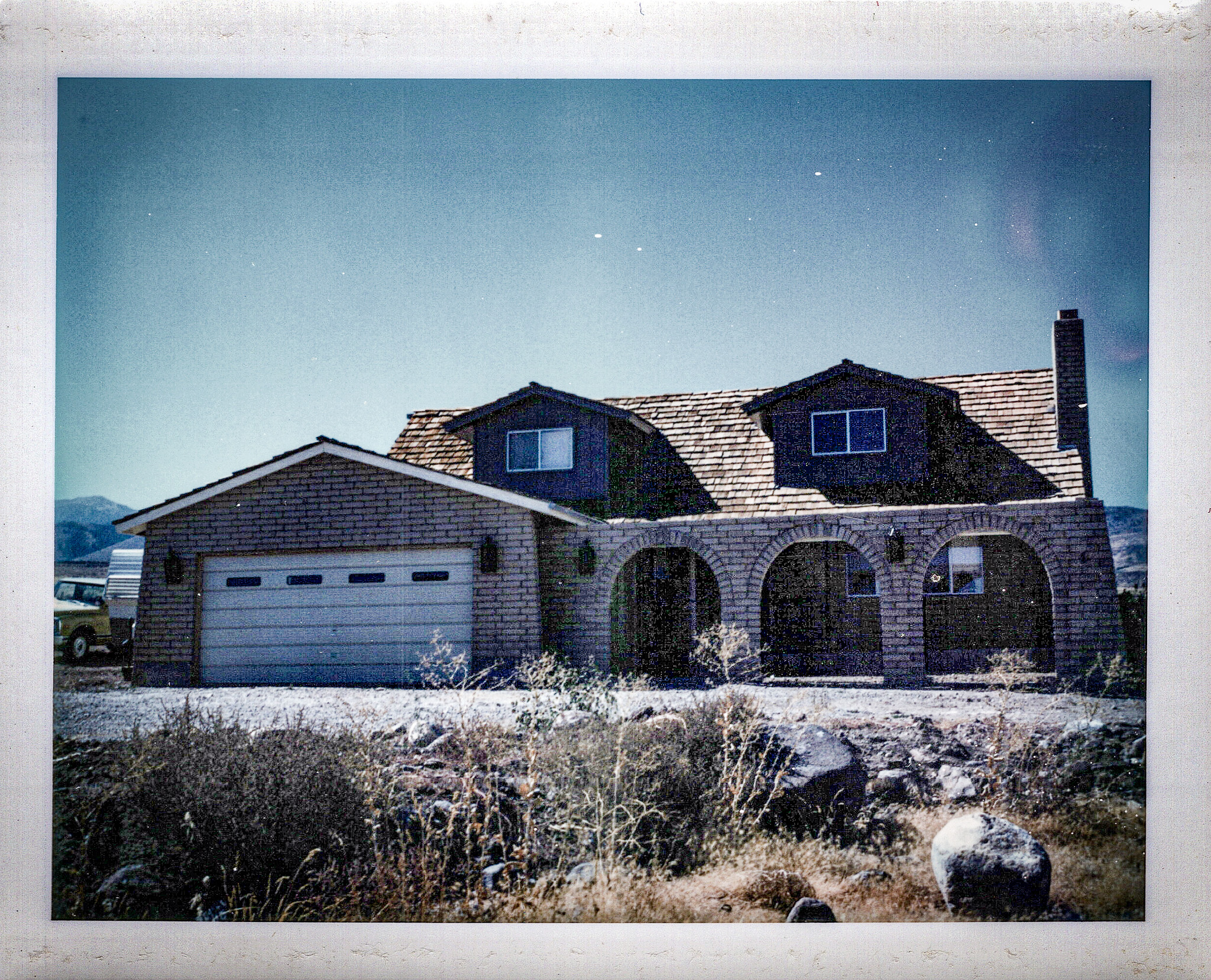
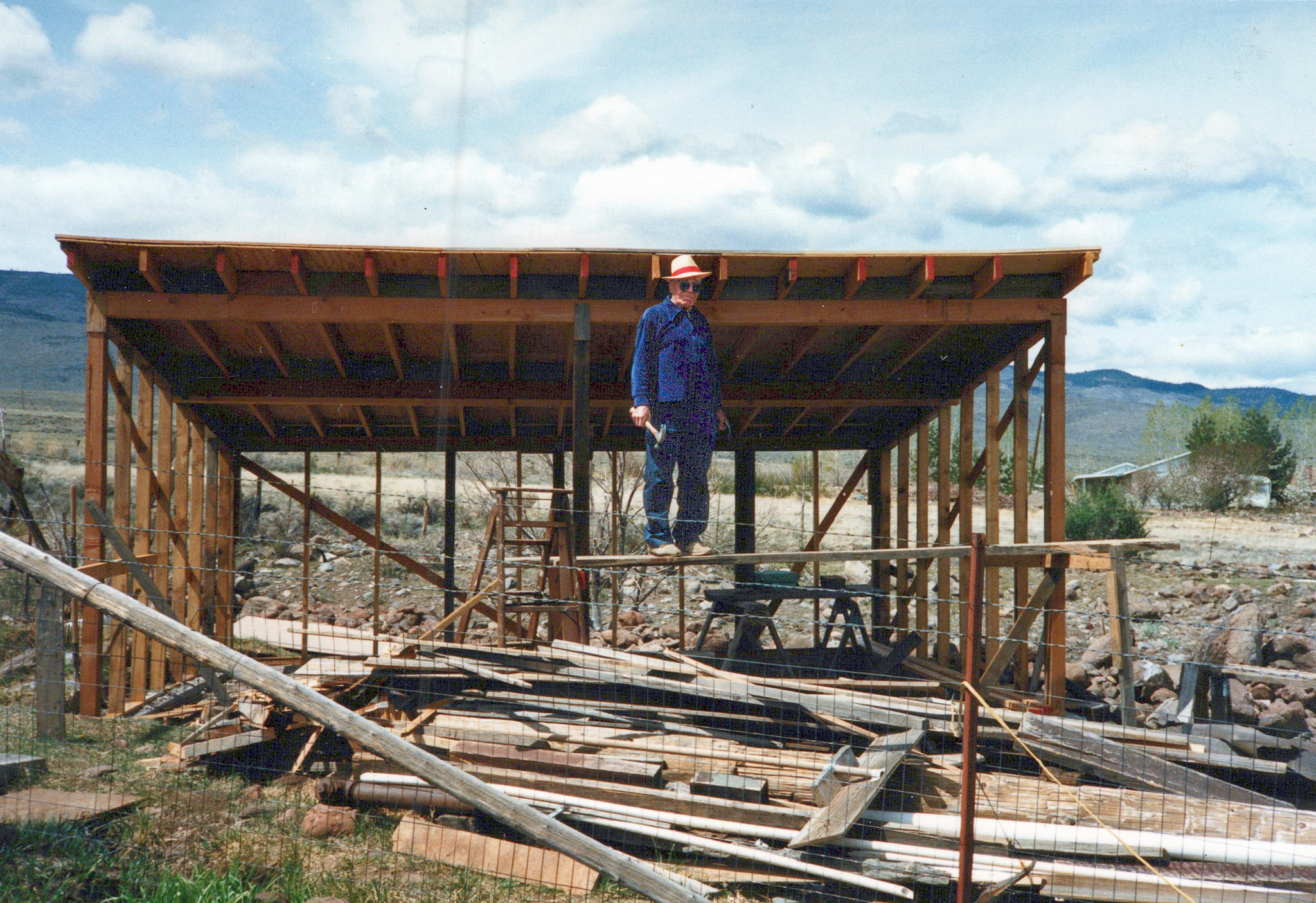
Joe and Gladyce’s groundbreaking in Reno, 1972
The retirement home that my father helped build on Vincent Lane represented for him the fulfillment of a longterm dream. He would marvel each morning as he gazed through the kitchen window across the open range, at the unobstructed view of the mountains
So, as the story goes, my father belonged to a community of workers who took pride in the fruits of their labor, showed exemplary dedication to their jobs, often in the face of major hurdles, and who were driven by a faith in their potential and in the transformative power of work. Most importantly, labor was the source of the dignity the derived from the appreciation and admiration for what they did… or made. This matter of dignity was foundational to the ethos that they inherited and sought to pass on in an era, it is important to recall, when the topic of labor and its organization was deeply imbedded in public discussions concerning the moral bases of our political systems. It is also noteworthy that my father found dignity in working as a member of a labor union in a refinery despite the fact that his lasting sense of accomplishment derived from raising children who would not need to do the same. The fact that our professional endeavors were as opaque to him as his were to us was really “immaterial,” his use of this term being one of the many charming idiosyncrasies of his English. Such words reflected the pride he developed as he learned to convey feelings in an acquired language and with his own personal style.
To be so proud of a craft that you hope you will not need to pass on captures a paradox lived by millions of working class families, both then and today. This paradox is essential, I believe, to many biographies that can be mobilized in support of a deeper understanding of our shared history and aspirations. As I have grown older I have pondered more and more the ways in which my father’s story serves that very purpose, how mid-century historical circumstances specifically seem refracted through the prism of his personal experience of displacement and renewal. Many art exhibits over time have helped me make sense of that prism.The paintings and photographs included in “Ben Shahn: On Nonconformity,” on display recently at the Jewish Museum in New York City, have proven uniquely useful in this regard.
Over the years I have gained a general familiarity with Shahn’s work, having seen his paintings and photography from time to time along with works by contemporaries and precursors who shared his faith in the power of art to document social reality, educate the masses and inspire change.
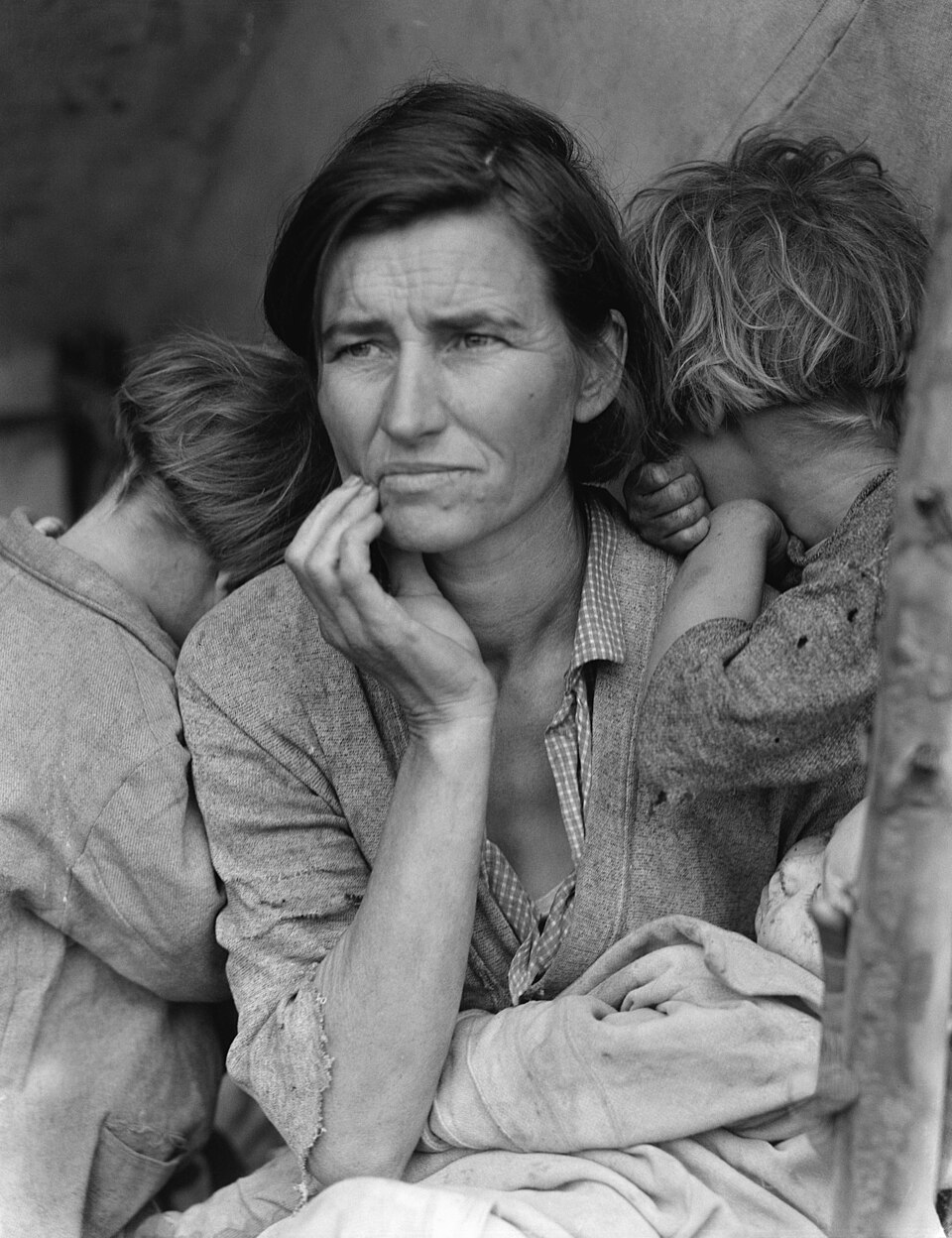
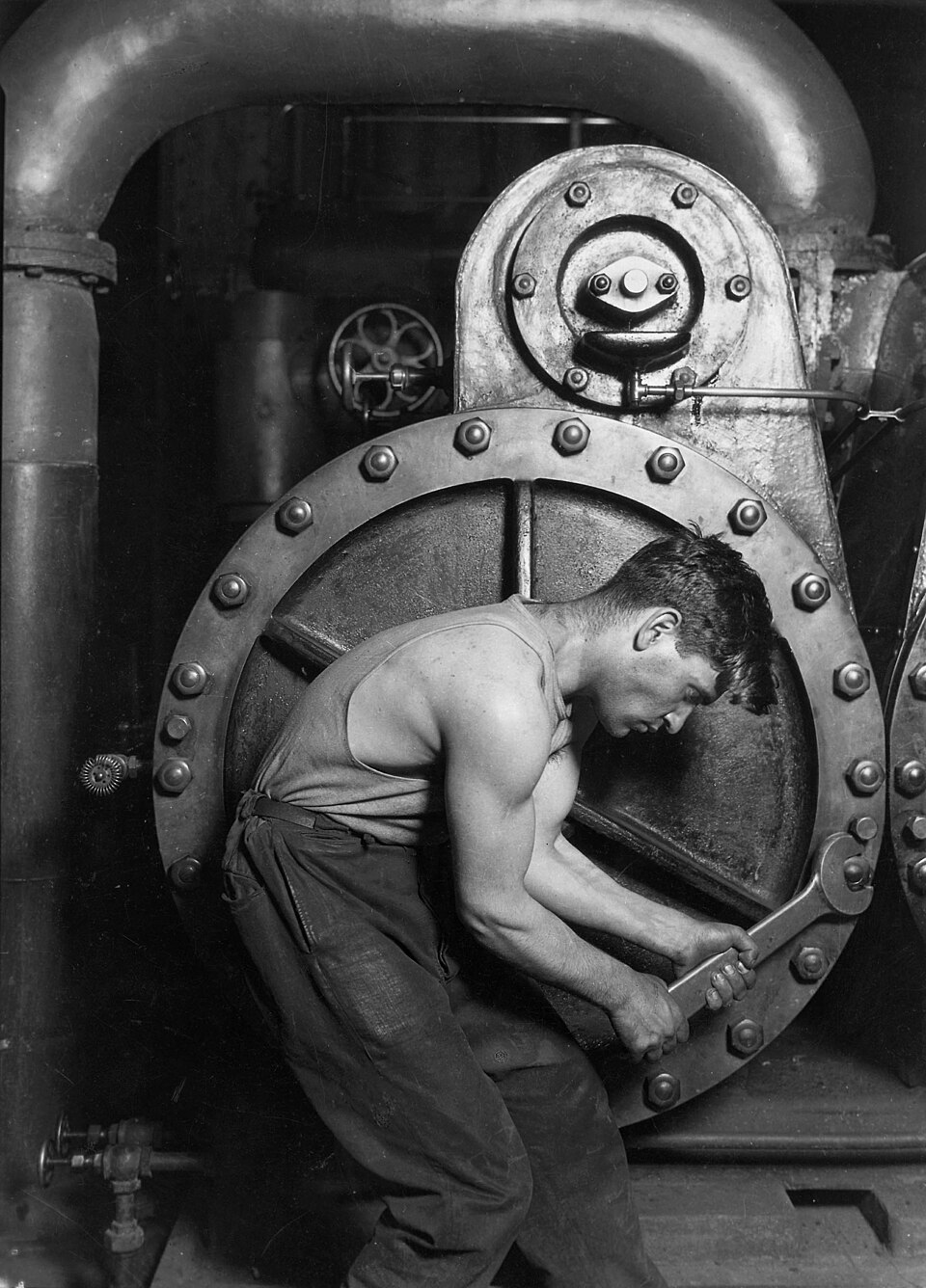

I have been struck, meanwhile, by how certain institutions seem particularly committed to supporting this type of art and its mission. The Museo Nacional Centro de Arte Reina Sofía in Madrid, where I first saw the Shahn retrospective (January 2024) has, over the years, hosted similar exhibits, perhaps most notably the Worker Photography Movement, 1926-1939 back in 2011. Works by American photographers such as those featured above appear periodically on the walls of the Reina Sofía. My lingering impressions of the riveting photos and paintings that I had seen in Madrid along with the symbolism of this exhibit being taken on by New York City’s Jewish Museum piqued my interest and prompted me to view “On Nonconformity” in September 2025 for a second time. It was clear to me that the Jewish community, ears attuned in the 1930s to the atrocities unleashed by European Fascism when many in the US remained tone deaf, had decided to sound the alarms once again.
Many of Shahn’s works refer explicitly to 20th century struggles to defend democracy wherever totalitarianism rears its ugly head: in the courts, in the corporate world, and certainly in global politics. I will deal with this theme at a later date and in greater detail. Suffice it to say here that Shahn argued visually and viscerally that labor organizations are an indispensable tool for the construction of a democratic society. A perhaps not so simple message resonates throughout his work. Democracy is predicated on the “self evident truths” that individuals achieve and preserve our “liberty and justice” through civic engagement. Political democracy and social justice nurture each other reciprocally, in a harmonious symbiosis.


A distinctively epic tone resonates throughout Shahn’s work, something that is especially evident in his larger-than-life murals. This must explain, in part at least, why his art kindles memories of my father, whose story straddles the history of proletarianism from its rise during the age of the Industrial Revolution (late 1800s) to the golden age of the American working class in the post World War II years, the years of my childhood. Along with other great muralists of his time, Shahn portrays the quest of a generation seeking to rewrite history with their hands, their wrenches and their trowels, and also with their voices and votes. But while reviewing “On Nonconformity” in its broadest strokes and thinking about Shahn’s portrayal of history writ large, I was left breathless when my eyes zoomed in on the intimate world of this bricklayer, placidly oblivious to all things extraneous to his craft, concentrating with singular “delicacy and focus,” as the label indicates, on this hands, his tools and the fruits of his labors: with a sense of dedication and pride that was so familiar to me, so imbedded in my memories of my father and our shared intimacies.


Shahn expresses in his writing the opinion that art is, by its very nature, non conforming, and that for this very reason it embodies the power to guide us toward unchartered territories of understanding. One of those unchartered territories of understanding clearly lies within ourselves, to judge from my own reaction to his work.

The non conformity he speaks of here is made evident not only by the images of citizens defying their oppressors but by his own insistence on defying the trend-setting avant garde artists of his day in their push to abandon figuration. The style he adhered to in both his painting and photography where for him his best shot at challenging us to exercise our agency, to integrate our own personal experience into the greater narratives of our time.
Coda
Shahn’s output continued up until the time of his death, in 1969. The changing political landscape following Franklin Roosevelt’s death in 1945 is reflected in many of Shahn’s works from the Truman era and beyond. “The Anxiety of the Cold War,” the title of the last section of his exhibit, captures this period with the air of a premonition that extends well beyond Shahn’s artwork itself. After seeing pieces in this last section cast in decidedly darker tones, we set out from the Jewish Museum down Fifth Avenue to the Guggenheim Museum, where works by Rachid Johnson (b. 1970) seem to cast a shadow over the very sense of potential and promise manifest in many of Shahn’s subjects from the earlier era.
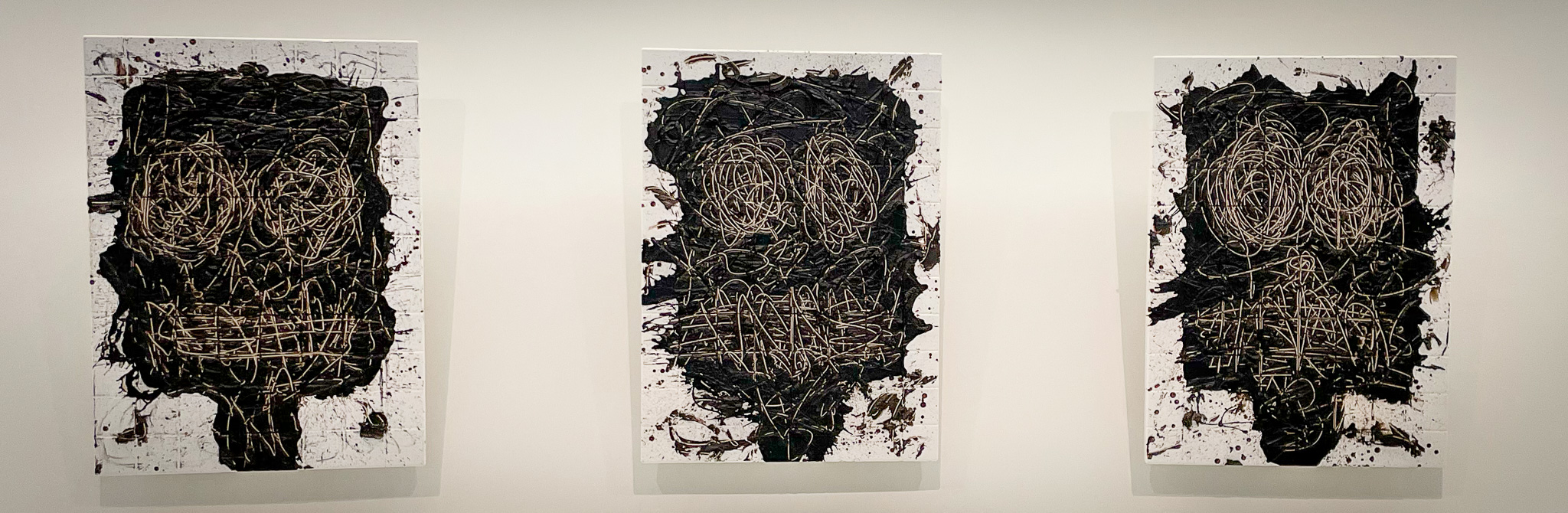
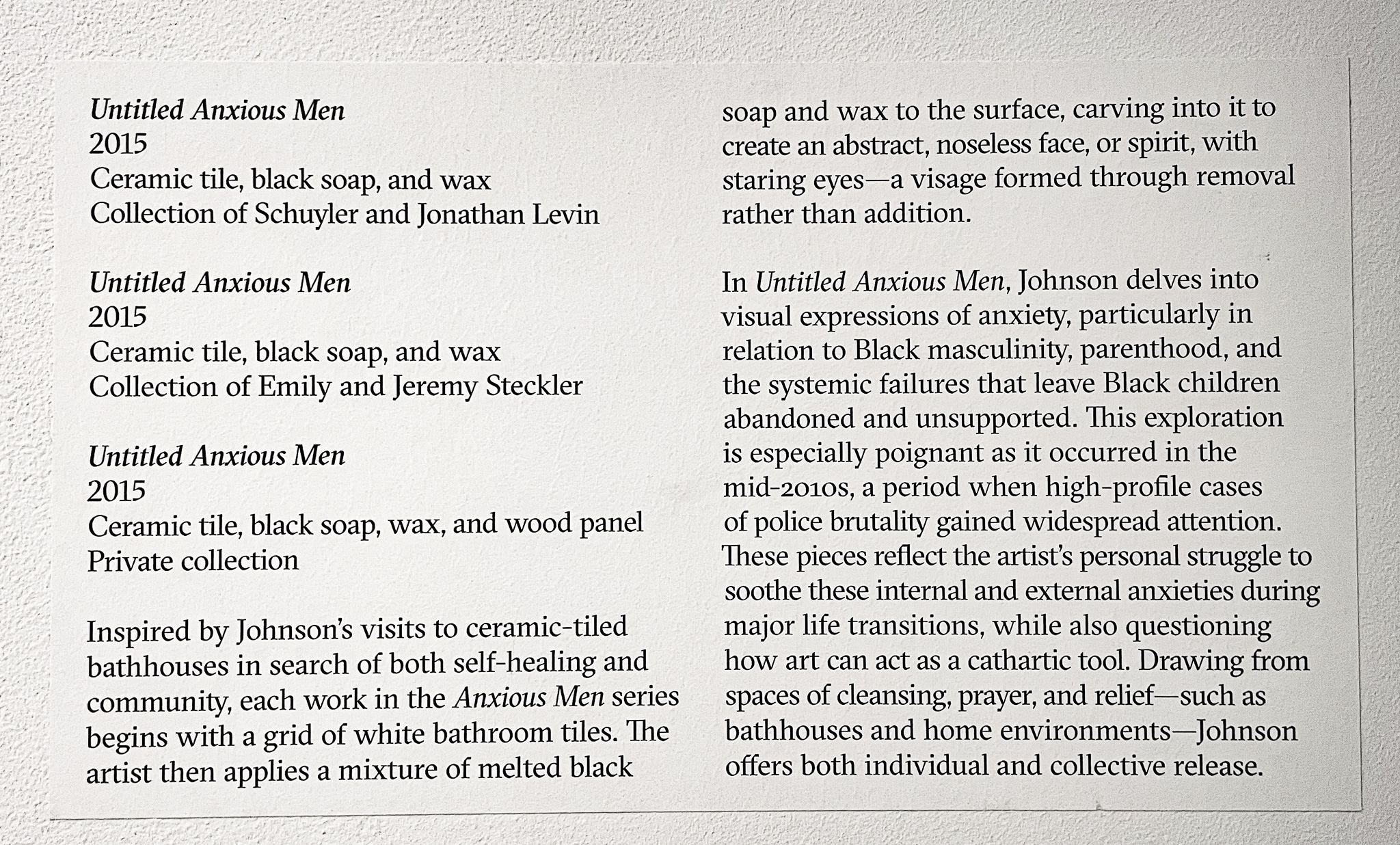
These Johnson’s portraits of men seemingly electrified by their anxiety, painted in 2025, seem to mark a breach heralded by the 1950s “Anxiety of Cold War” works included in the last section of the Shahn exhibit. When I confronted Johnson’s work, memories of an entire era seem to recoil further in the fogs of my past. I was left pondering the disbelief my father would feel if he were here to face such an anxious population, a world that has deprived them of any inherited promise, potential or sense of dignity… or if he would even be able to recognize it.
A smattering of documents
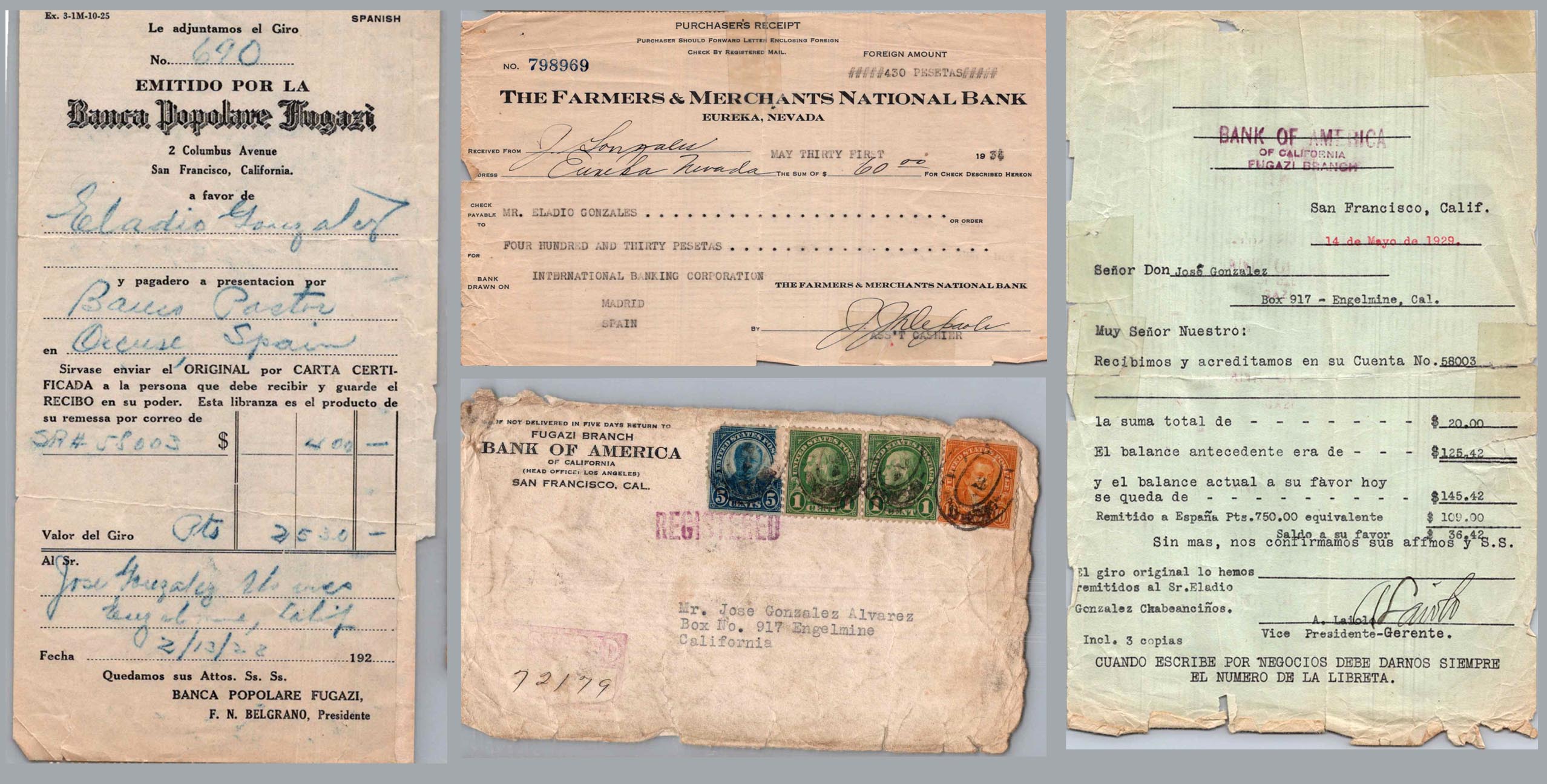
Samples of the remesas (remittances) that dad sent to his father, Eladio Gonzalez, in Orense, Spain. The earliest are from 1928 and 1929, shortly after dad arrived in California and while he was working in the Engel copper mine in Plumas County, California. Those remittances were issued by the John f. Fugazi’s Banca Poplare, a San Francisco bank that served the immigrant community and that was later absorbed by A.P. Giannini’s Banca d’Italia, later Bank of America. By 1934, as the middle copy reads, dad was already working near Eureka, Nevada, most likely in sheep camps.
It is worth noting that the San Francisco transactions were conducted entirely in Spanish.
Engelmine (see dad’s address on envelope) is a story onto itself. It was a company‐townsite and mining camp established in connection with the Engels Copper Mining Company in the north end of the Plumas Copper Belt in Plumas County, California. The townsite reached its peak in the 1920s, reportedly with a population around 1,200. The mine closed in 1930, due to the drop in copper prices and the onset of the Great Depression. Engelmine included a townsite laid out for workers and their families, mill and mining operations, rail connection via the Indian Valley Railroad, and supporting infrastructure.


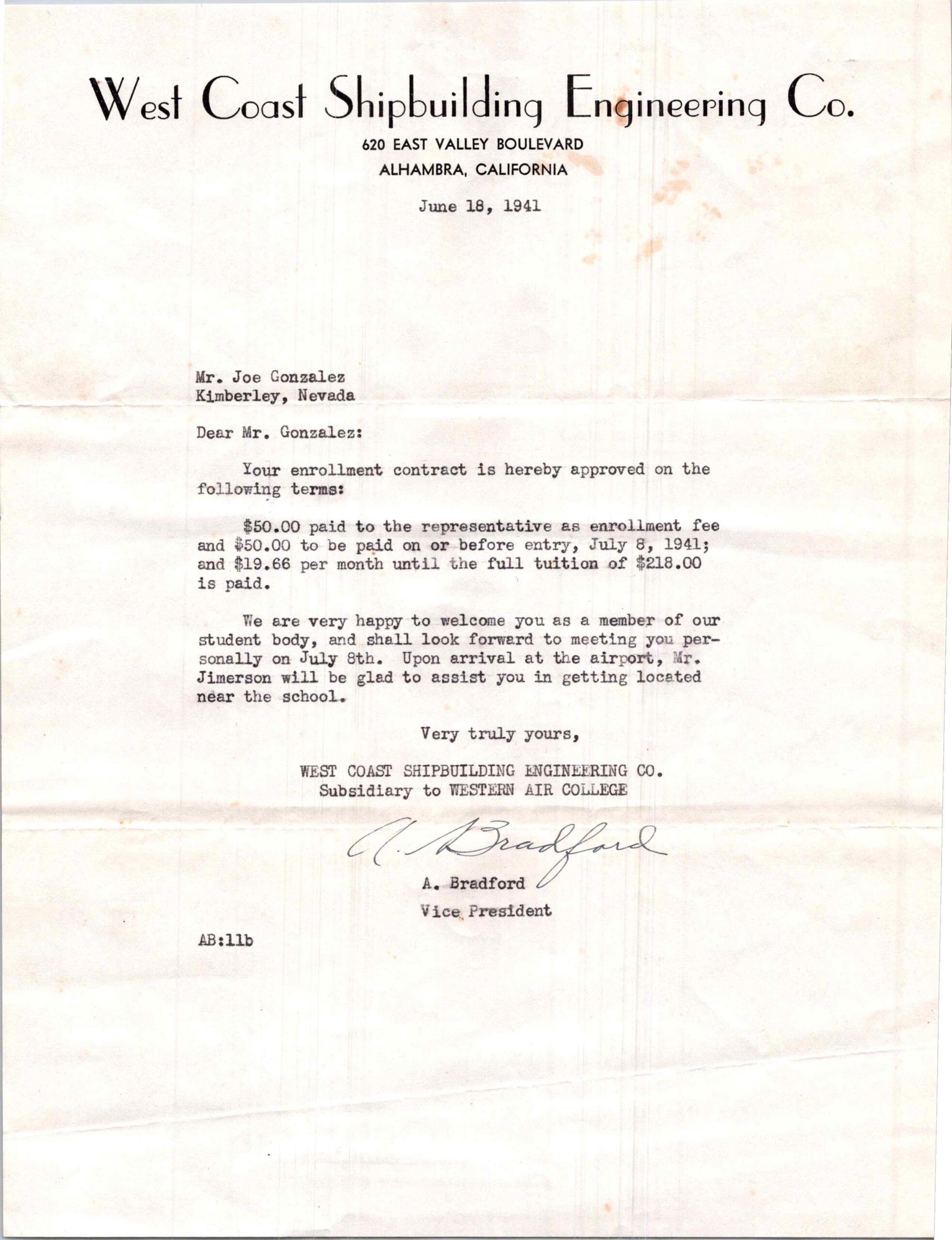


Presumably my father began to learn his skilled trade when we was admitted to the “West Coast Shipbuilding Engineering Co.,” which was not a shipyard but a training school that prepared workers for wartime industrial trades. The Western Air College (later part of the Cal-Aero schools) trained aircraft mechanics and equipment operators. They also ran short-term training for metalworking, welding, machine work, and fitting. Dad’s admission into this training program came just months before the attack on Pearl Harbor, provoking the United State’s declaration of war. The US had already begun emergency mobilization of workers for defense industries–aircraft plants, shipyards, and metal fabrication.
The other affidavits attest to my father’s skills and work ethic, at a time when he apparently needed to move on. The war was winding down. It is difficult to know whether his legal status became an impediment at this point.
Below, documentation of deportation orders, his application for naturalization. He became a citizen in 1946, married for 8 years with a wife and two children (7 and 6 years old) and after 18 years living and working in the United States.




I absolutely LOVED ready this and hearing these stories. Thank you so much for taking the time to write it.