Dalí infinito in Madrid’s Palacio Gaviria
The opening of Dalí infinito at the Palacio de Gaviria marks a significant moment in Madrid’s emergence as a world-class center for the arts. The exhibition brings together 54 sculptures that Salvador Dalí modeled in wax between 1973 and 1980 and later sold to his collector friends Isidro Clot and Juan Quirós. The resolution of longstanding legal questions in 2025 has finally cleared the way for the public display of these works in what now appears destined to become their permanent home.
Several aspects of this development are especially striking. Dalí’s deepest connection to Madrid dates to the formative years between 1922 and 1926, when he studied at the Real Academia de Bellas Artes de San Fernando while living at the legendary Residencia de Estudiantes. The friendships fostered there—most notably with Federico García Lorca and Luis Buñuel—proved decisive in the formation of his artistic identity. Indeed, Dalí’s lifelong engagement with Surrealism stands as perhaps the clearest testament to the enduring importance of his years at Madrid’s Residencia.
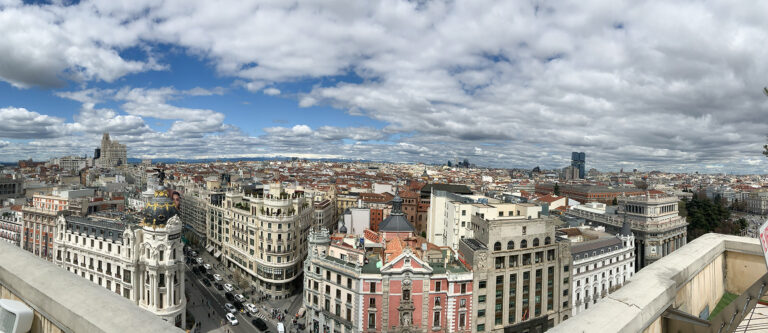
Beyond the 1920s, Dalí returned to the capital only sporadically—for exhibitions, social engagements, publishing ventures, film collaborations, and the official recognitions accorded him during the Franco era. His artistic persona remained far more closely associated with Catalonia—Cadaqués above all, where he made his home—and with France. In a sense, the incorporation of major works by Salvador Dalí into the collection of the Museo Nacional Centro de Arte Reina Sofía represented the Catalan artist’s first major landing in democratic-era Madrid. Seen in this light, it is difficult to overstate the significance of a permanent installation of Dalí’s work opening just steps from Puerta del Sol.
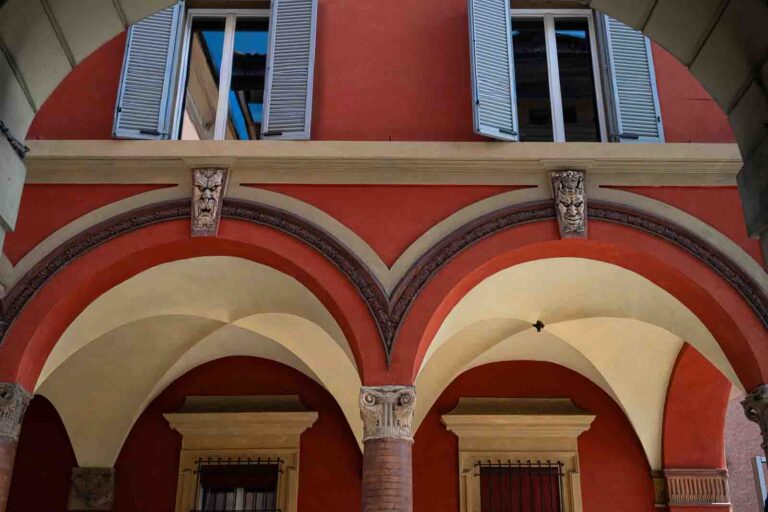
Equally significant is the fact that the Clot-Quirós Collection has found its home in the Palacio de Gaviria. Built in the 1840s as the lavish residence of the financier and politician Manuel Gaviria y Douza, Marquis of Gaviria, the palace occupies a privileged location in the heart of Madrid on Calle Arenal, the street leading toward the Teatro Real and the Royal Palace. It soon became an important gathering place for Spain’s political and economic elite, the monarchy included. The grand staircase and richly decorated salons of the piano nobile reflect the building’s eclectic historicist style, inspired in part by Italian Renaissance palaces, and stand today as reminders of its more illustrious past. After decades of damaging alterations, decline, and neglect, the palace underwent a partial restoration in the 2010s and was repurposed as an exhibition and events space. The decision to house the Clot-Quirós Collection there forms part of broader ambitions to restore fully this singular nineteenth-century palace and make it a prominent emblem of the city’s cultural heritage.
One might reasonably ask how this particular collection of Dalí sculptures fits within such ambitions and how, in turn, it relates to the space that now houses it. These are questions I cannot fully answer, though I can convey my own sense of the tensions the installation produces—tensions to which visitors will no doubt respond differently. Sculpture was never the medium for which Salvador Dalí was most celebrated. Created late in his life, during the 1970s and 1980s, these works have at times been described as stylistically dated. Yet they nonetheless reflect many of the currents that shaped Dalí’s postwar evolution: performance and theatricality; mysticism and spirituality; and a renewed engagement with Greco-Roman and the Spanish classical traditions.
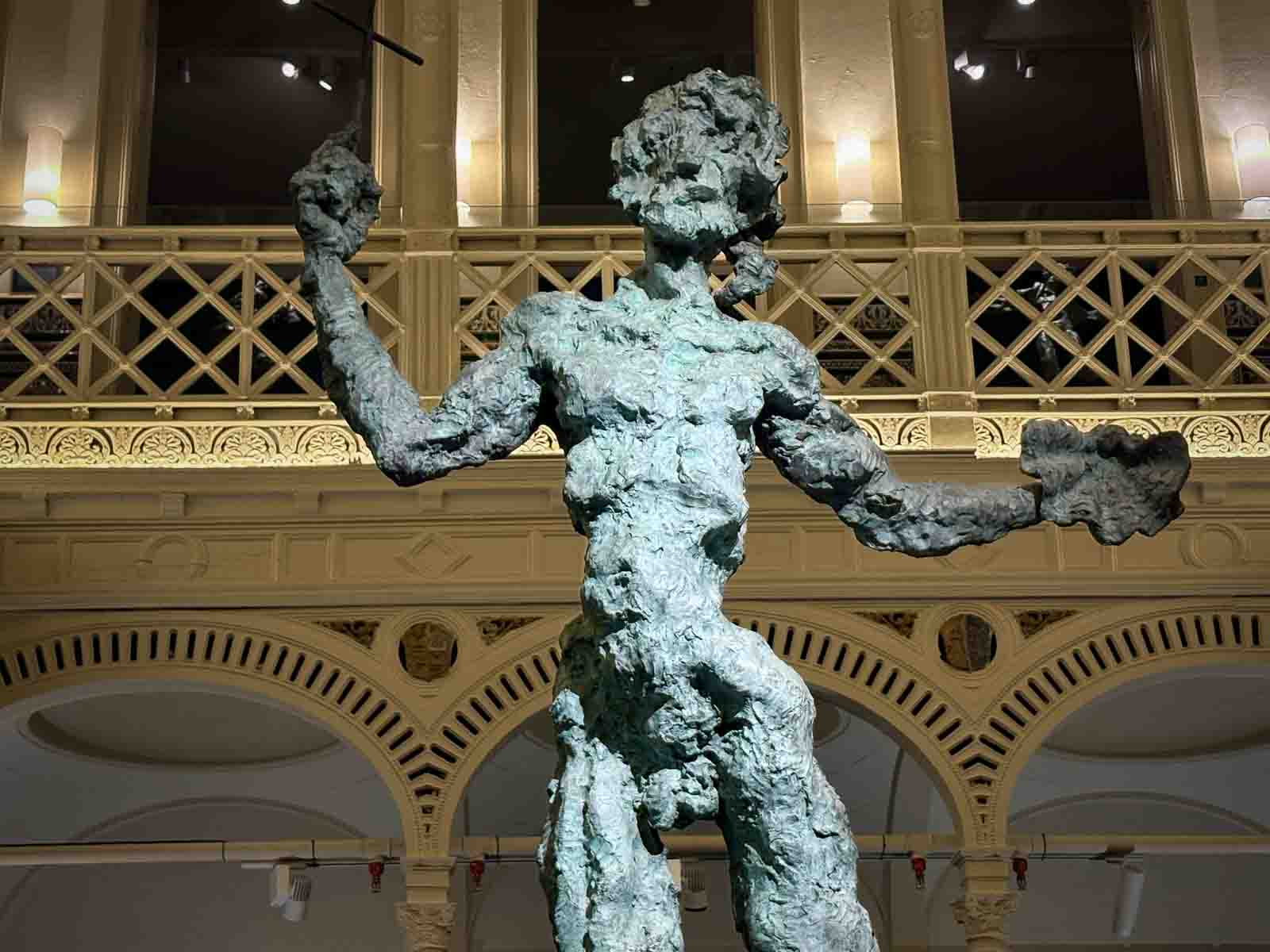
Viewed within the Palacio de Gaviria, the collection strikes me as deeply idiosyncratic. And yet I suspect that this sensation of dissonance may be precisely the point. Dalí’s Saint John the Baptist is a case in point. Reminiscent of early twentieth-century expressionism, this piece rises beneath the arcades of an Italianate Renaissance Revival patio built for Madrid’s status-conscious nineteenth-century bourgeoisie. The eclecticism of it all makes me acutely aware of a certain theatricality that derives from the setting working in tandem with the artwork.
For the artist who arrived in 1974—elephants included—at the inauguration in Figueras of his Dalí Theatre-Museum, the experience of Dalí infinito within the partially restored Palacio Gaviria would probably have made perfect sense.





Texts
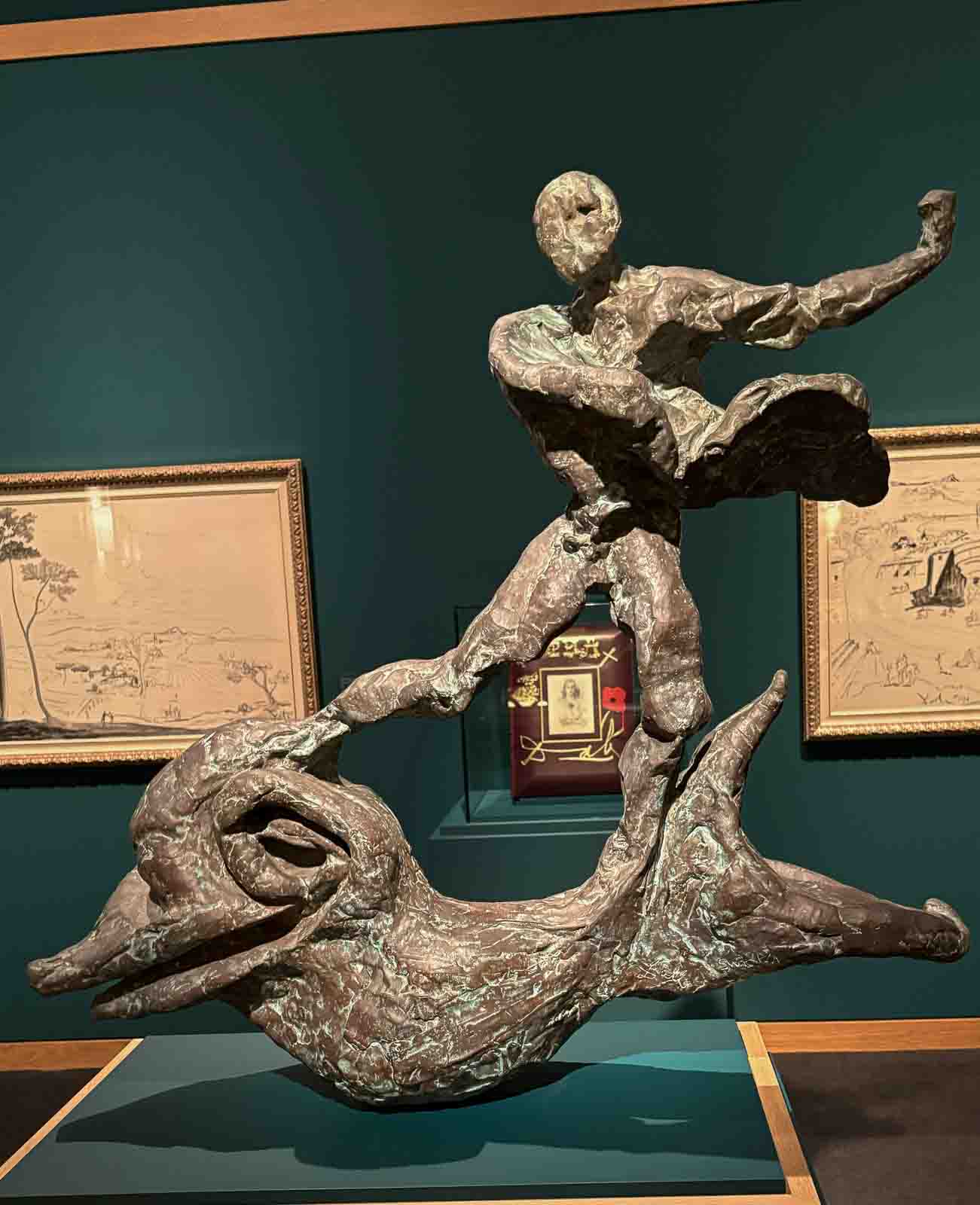
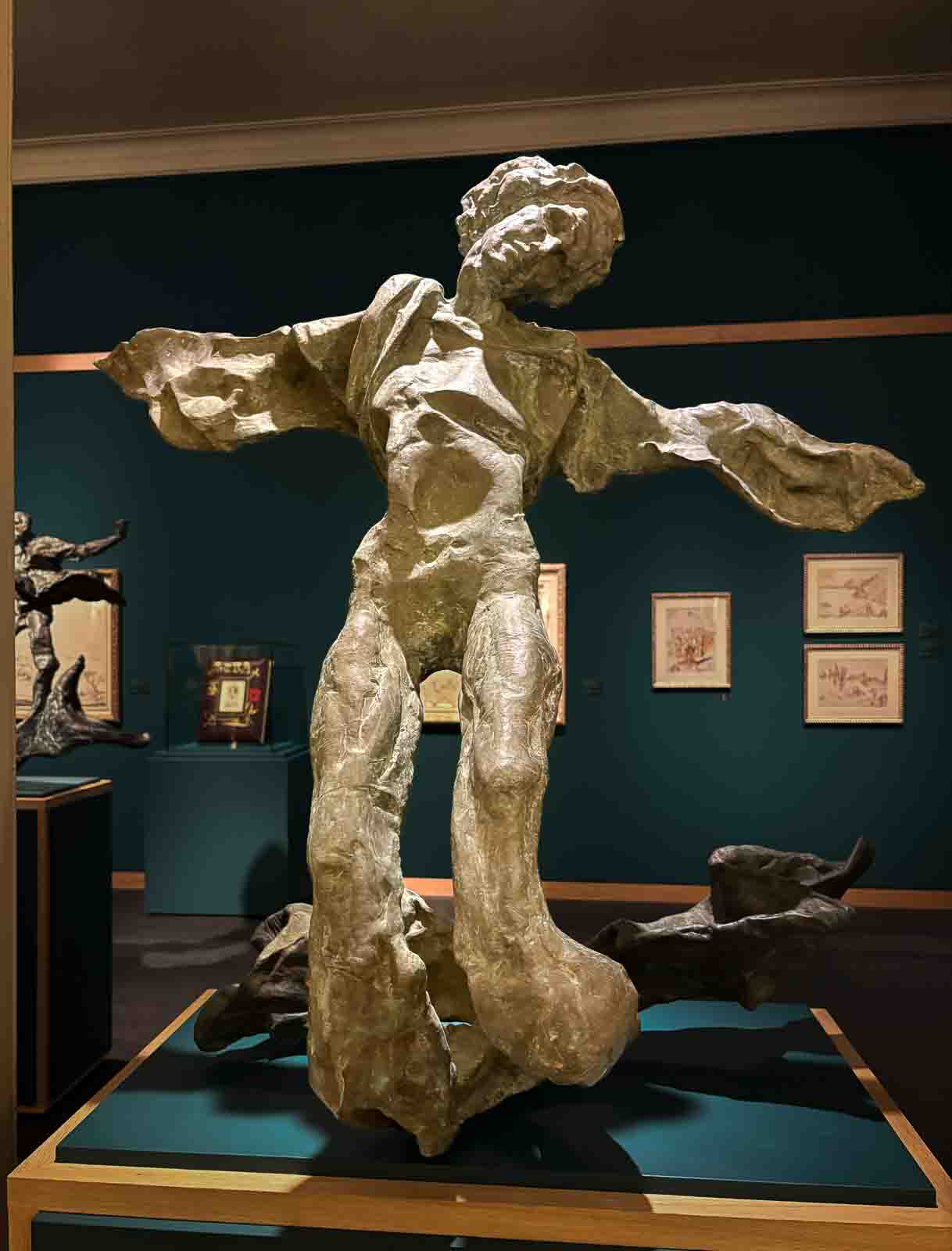
Icarus (1988)
Dalí’s profound familiarity with Greek mythology served him as an artistic resource for various themes associated with his own interests. The myth recounts the escape of Daedalus and Icarus, father and son, imprisoned by King Minos of Crete within the labyrinth of Knossos. Daedalus ingeniously constructs wings with which to fly, but once airborne Icarus, seduced by the spectacle of flight, ignores Daedalus’s warnings. The myth of Icarus represents the arrogance of youth contrasted with the humility born of experience, but it is also the conflict between father and son, between the prudence of maturity and the recklessness of youth—elements associated with Dalí’s own difficult and complex relationship with his father. By the time Dalí created this sculpture, in full maturity, his familial demons still persisted and were neutralized through themes such as these, which question the meaning and value of myth itself.
Classical authors recount the story, as does Virgil in the Aeneid. For Horace, the flight of Icarus symbolizes poetic daring, and in sixteenth-century Spain writers such as Garcilaso de la Vega (c. 1501–1536) treated the theme by comparing the flight to the impulse of love. The destruction of Icarus suggests the blinding radiance of the beloved—an image very much in keeping with Dalí’s sensibility. Yet for Dalí, Icarus also carries meanings akin to Plato’s theory expressed in the Phaedrus: “the natural power of the wing lifts us above opinion (doxa) and toward the knowledge of true understanding.”
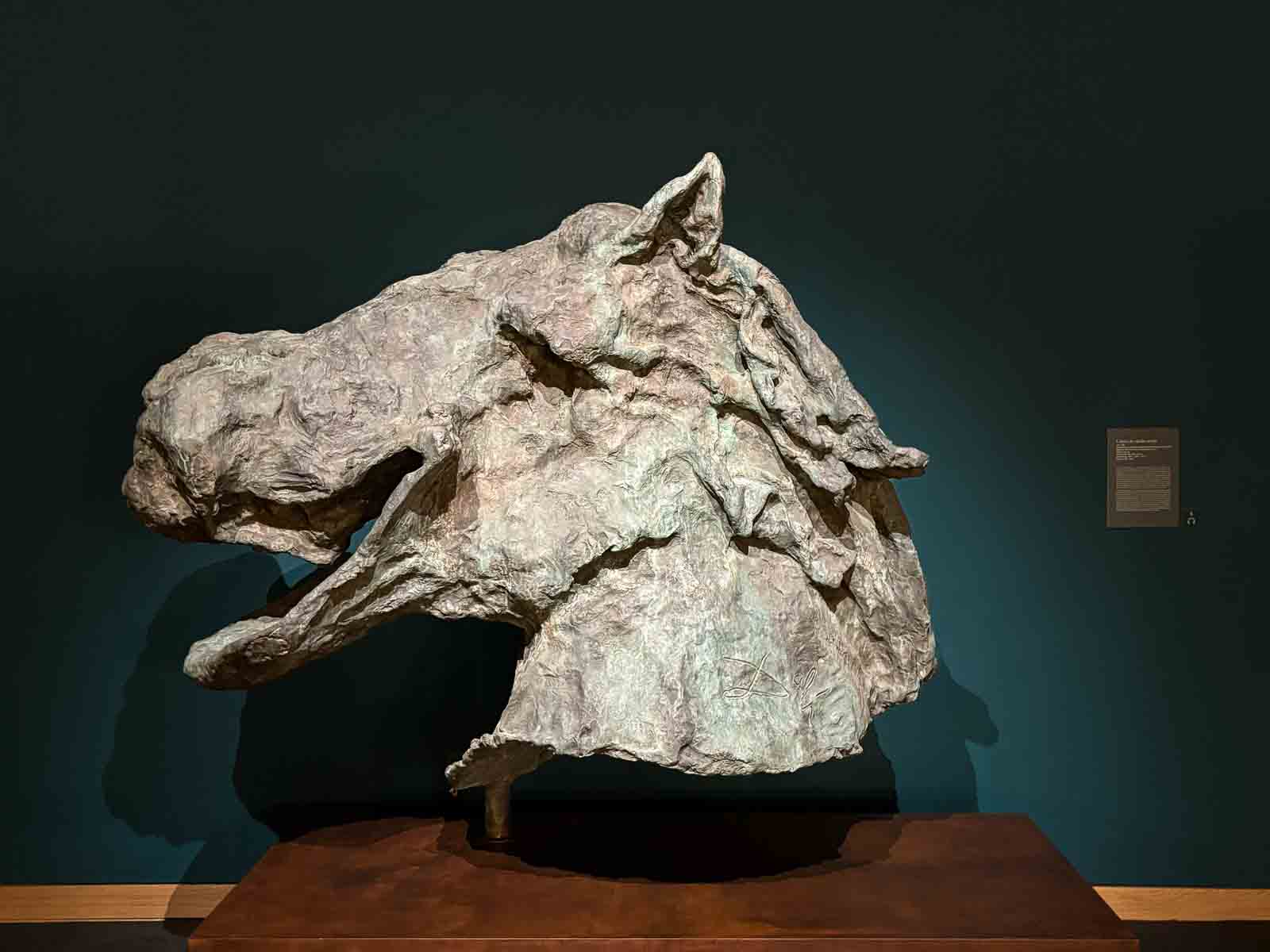
Laughing Horse Head (1986)
Horses populate Dalí’s artistic universe and appear throughout his entire career. The artist regarded them as symbols of strength and youth and associated them with the forces that sustain the tension between the conscious and the unconscious. They serve as emblems of a benevolent existence, yet he also saw them as bearers of human destiny. For this reason, he used mythological horses to portray various aspects of human nature. Thus, he recreated alike the Trojan Horse and a fluid horse, a racehorse and the horse accompanying the rider of death—the latter functioning as a metaphor for archaic structures laden with symbolism nourished by the unconscious impulses of the human psyche.
This sculpture takes as its model the magnificent horse’s head that forms part of Selene’s chariot on the eastern pediment of the Parthenon (c. 440 BC). In 1827 Johann Wolfgang von Goethe said of it: “In the Elgin horse’s head, one of the most splendid remnants of the supreme age of art, the eyes protrude and appear beside the ears, so that the two senses, sight and hearing, seem to act together, and the noble creature appears capable of hearing and seeing behind itself through the slightest movement.” Beginning from the original image, the artist reveals a modern version of pure classicism based on its powerful and fantastic appearance, combined with the distorted perception of the dreamlike vision of a creature whose reality has been disfigured.
Saint John the Baptist (1988)
Just as Dalí immersed himself in the study of science, mathematics, and physics, his emotional commitment following his return to Christianity led him toward the study of the most representative figures of Christian spirituality through an aesthetic analysis in which he applied to Surrealism his discoveries in the field of “nuclear mysticism.” Saint John the Baptist is the figure who precedes Christ. The sculpture portraying him falls within a framework for understanding figures who were essential to the process of messianism: men whose strength transcends the passions of the flesh, whose spirituality surpasses time and endures to this day as an example of elevation above material existence.
Dalí focuses on recreating the image of Saint John while exalting his role as precursor of the transformations that would occur after Christ’s arrival. Thus, drawing upon the model of the Spanish artistic tradition—especially the Baroque of the seventeenth century—he creates a sculpture whose references to “formal mysticism” can be found both in the painting of his admired El Greco (1541–1614) and in the works of the great sculptors of the Castilian school. Dalí metaphorically unites in this sculpture two episodes from Saint John’s life: the preaching in the desert—“the voice crying out in the wilderness” (John 1:23)—and the memorable gesture of Christ’s baptism, whose account appears in all four Gospels.
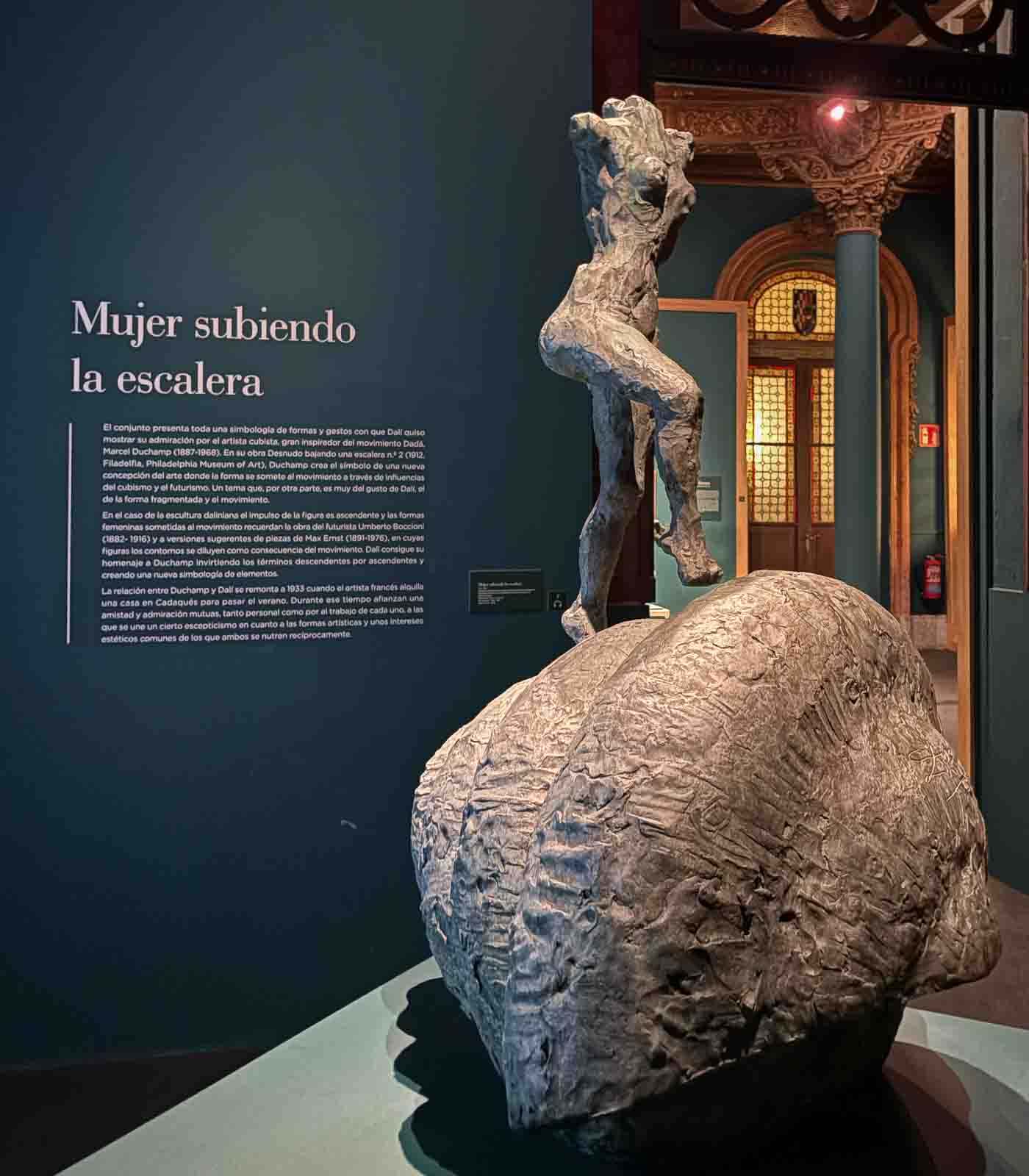
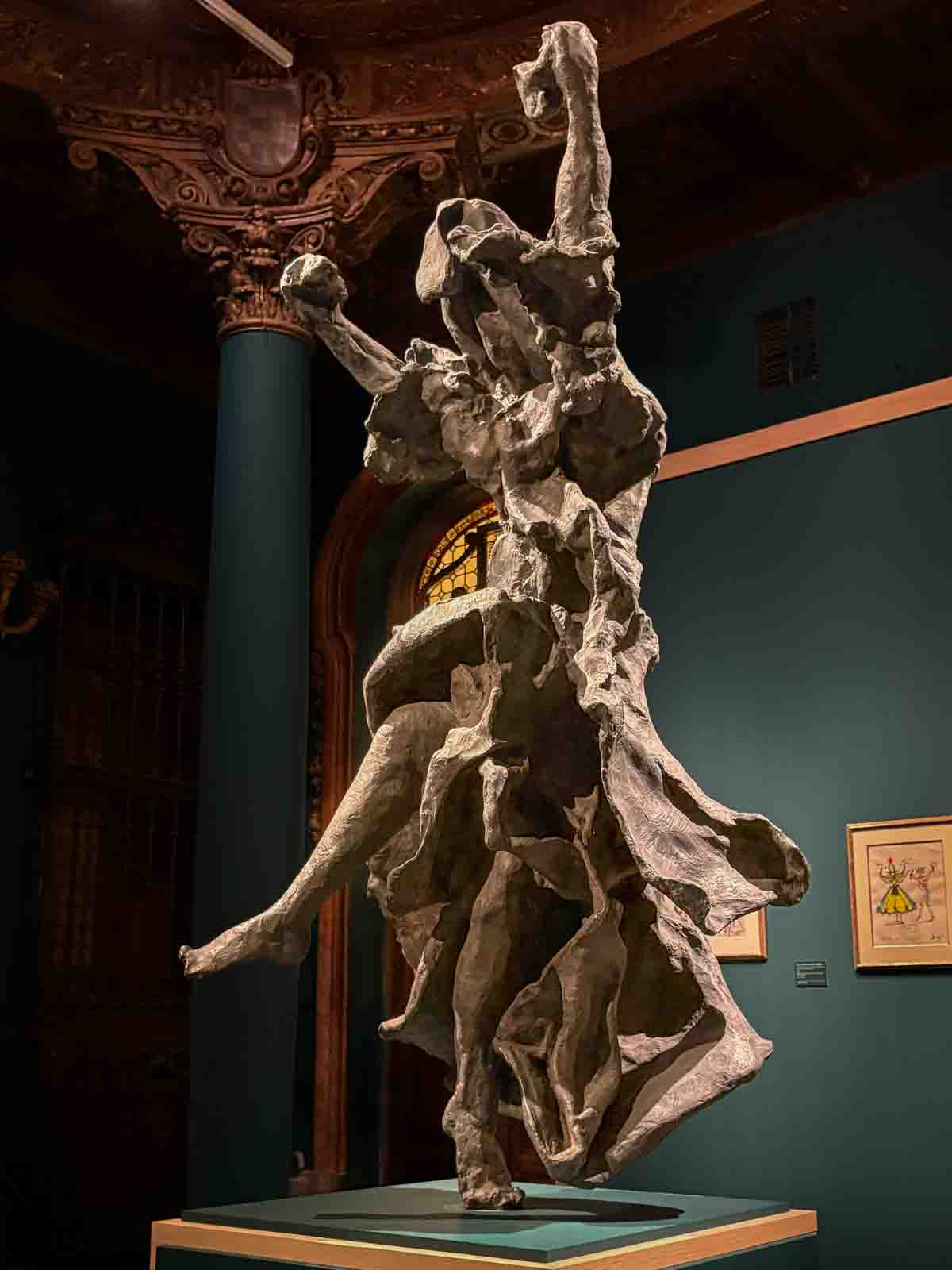
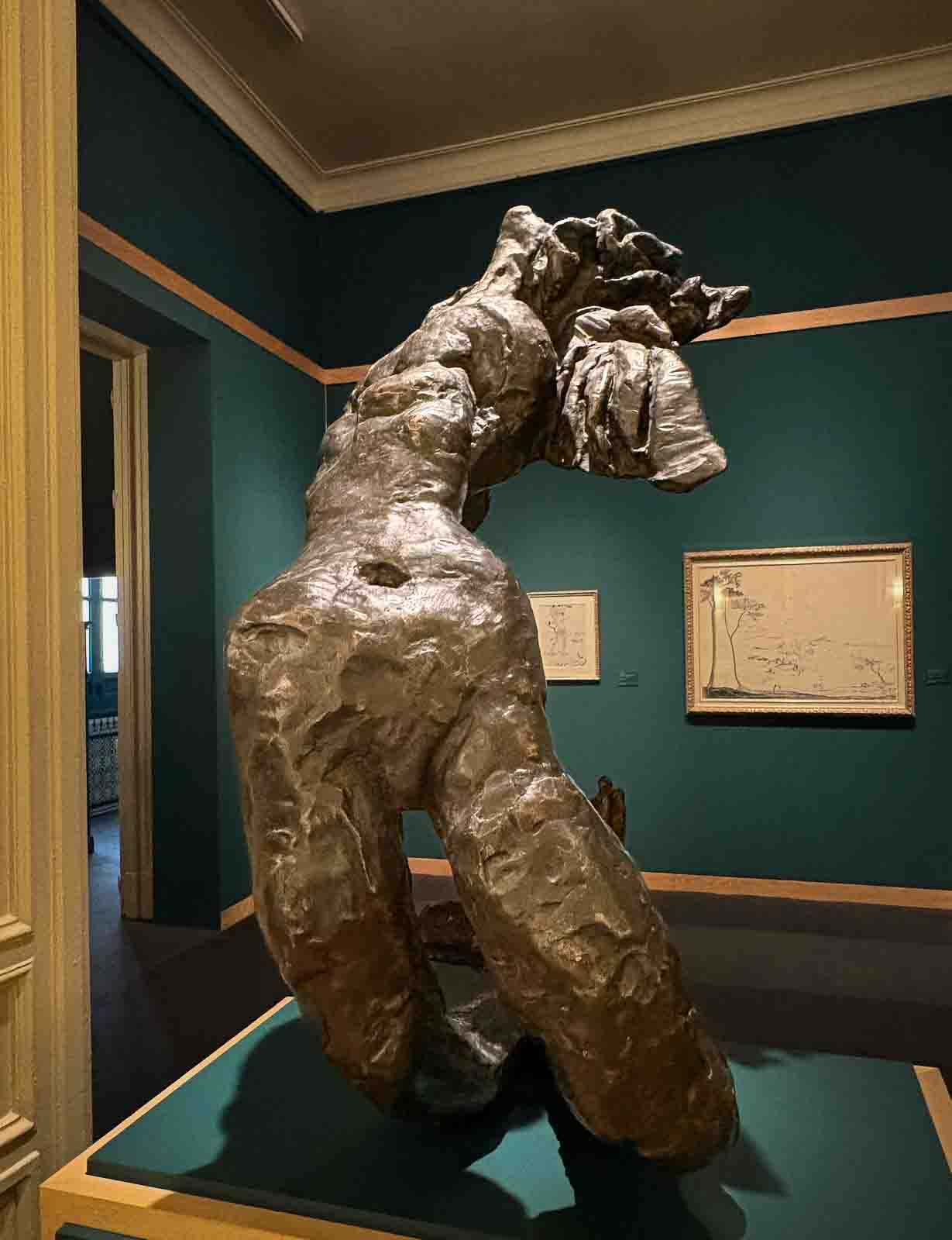
Woman Climbing the Staircase (1988)
The ensemble presents a rich symbolism of forms and gestures through which Dalí sought to express his admiration for the Cubist artist and great inspirer of the Dada movement, Marcel Duchamp (1887–1968). In his work Nude Descending a Staircase, No. 2 (1912, Philadelphia Museum of Art), Duchamp created the symbol of a new conception of art in which form becomes subordinate to movement through the influence of Cubism and Futurism. This theme—the fragmented form and movement—is, moreover, very much in keeping with Dalí’s own artistic sensibility.
In Dalí’s sculpture, however, the figure’s impulse is upward, and the feminine forms subjected to movement recall the work of the Futurist Umberto Boccioni (1882–1916), as well as suggestive versions of works by Max Ernst (1891–1976), whose figures dissolve their contours as a consequence of motion. Dalí creates a tribute to Duchamp by reversing the terms of descent into ascent and thereby creating a new symbolism of forms and elements.
The relationship between Duchamp and Dalí dates back to 1933, when the French artist rented a house in Cadaqués for the summer. During that period, they developed a mutual friendship and admiration, both personal and artistic, united as well by a certain skepticism toward artistic conventions and by shared aesthetic interests from which both artists mutually nourished one another.
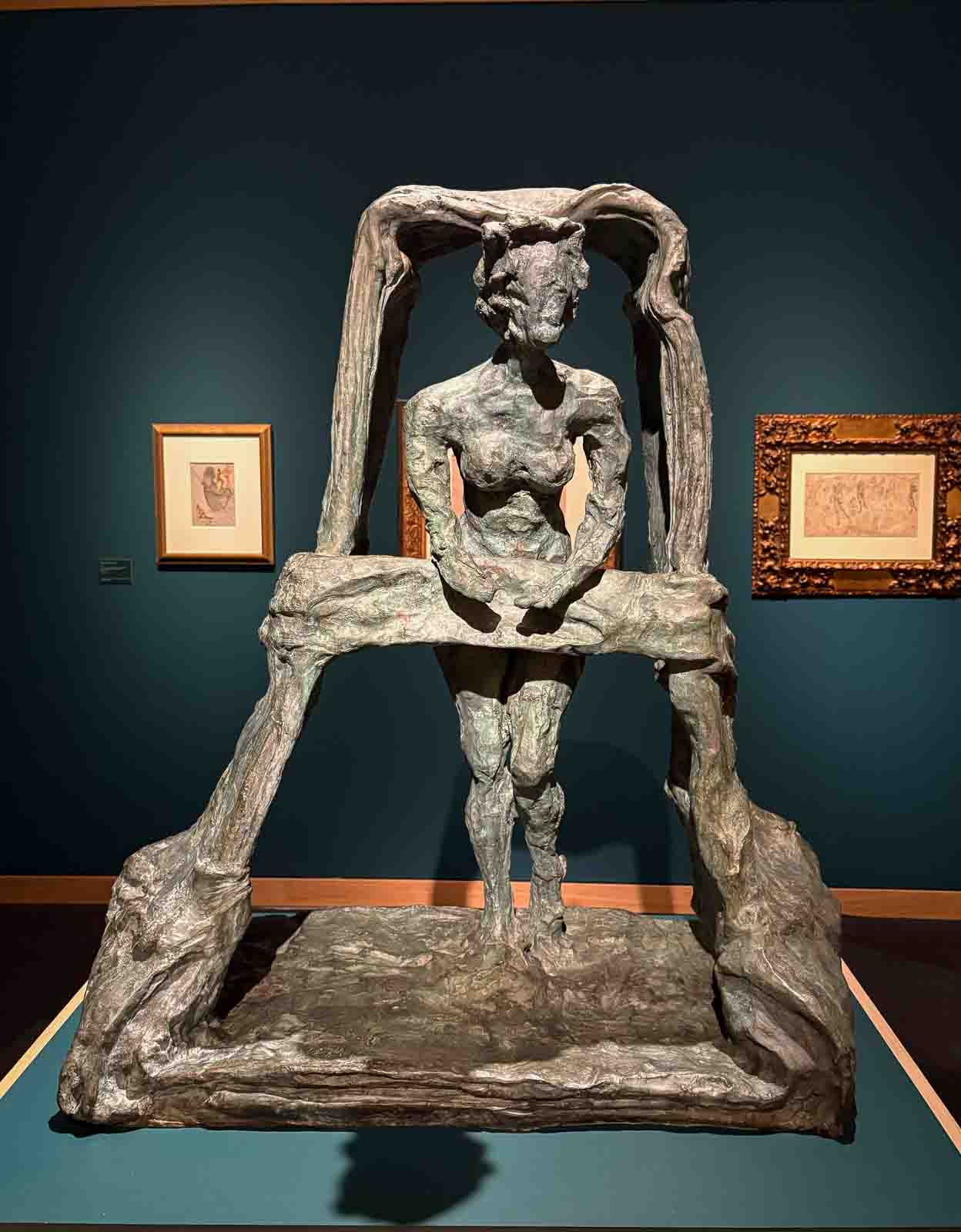
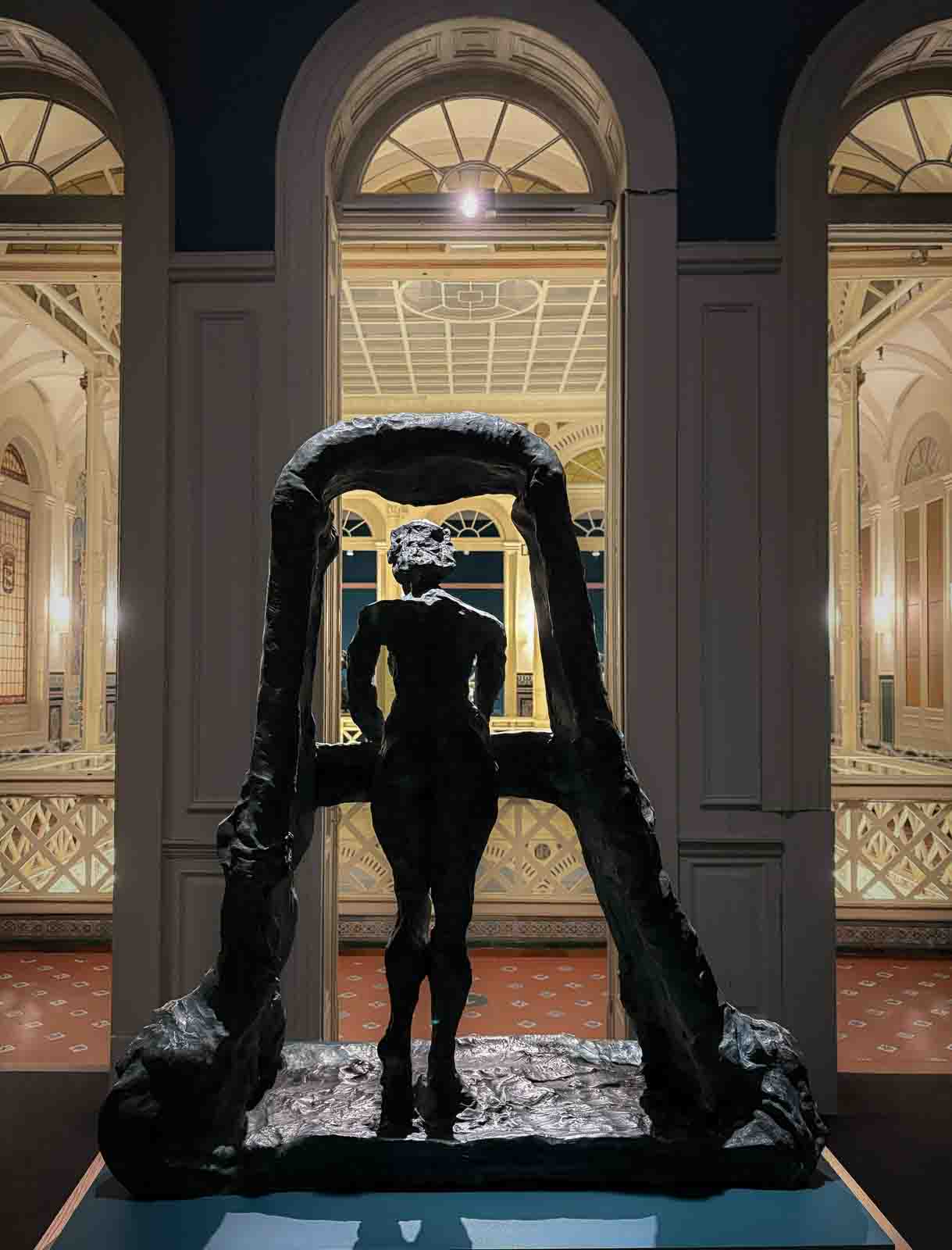
Gala Looking Out the Window (1985–1987)
Gala (Helena Deluvina Diakonoff, 1894–1982) met Dalí while vacationing with her husband, Paul Éluard (1885–1952), in Cadaqués in 1929. For both Gala and the painter it was love at first sight, and what followed was not merely a romance but a profound symbiosis of art and personality that would inspire Dalí’s work and shape his very existence. Dalí’s muse is the protagonist of this sculpture, which is formed by a capital letter “A” and her nude standing figure cut into the hollow of the letter like a window.
The composition recalls the painting Dalí made in 1925 of his sister Ana María—his habitual muse before the appearance of Gala—entitled Girl at the Window (Muchacha en la ventana, Madrid, Museo Nacional Centro de Arte Reina Sofía). Critics of the time considered the painting a form of “sculptural painting” because of the solidity and forcefulness of its forms. The sculpture suggests the same emphatic lines as the protagonist of the painting; as in the earlier work, the piece reimagines a dual spatial game in which the figure itself introduces the viewer into the represented space. To this must be added the formal application of the paranoiac-critical method, for which Gala served as Dalí’s true muse. Gala Looking Out the Window formed part of a broader project in which Dalí intended to model the word “GALA” using the letters of her name, though this was the only piece he ultimately completed.
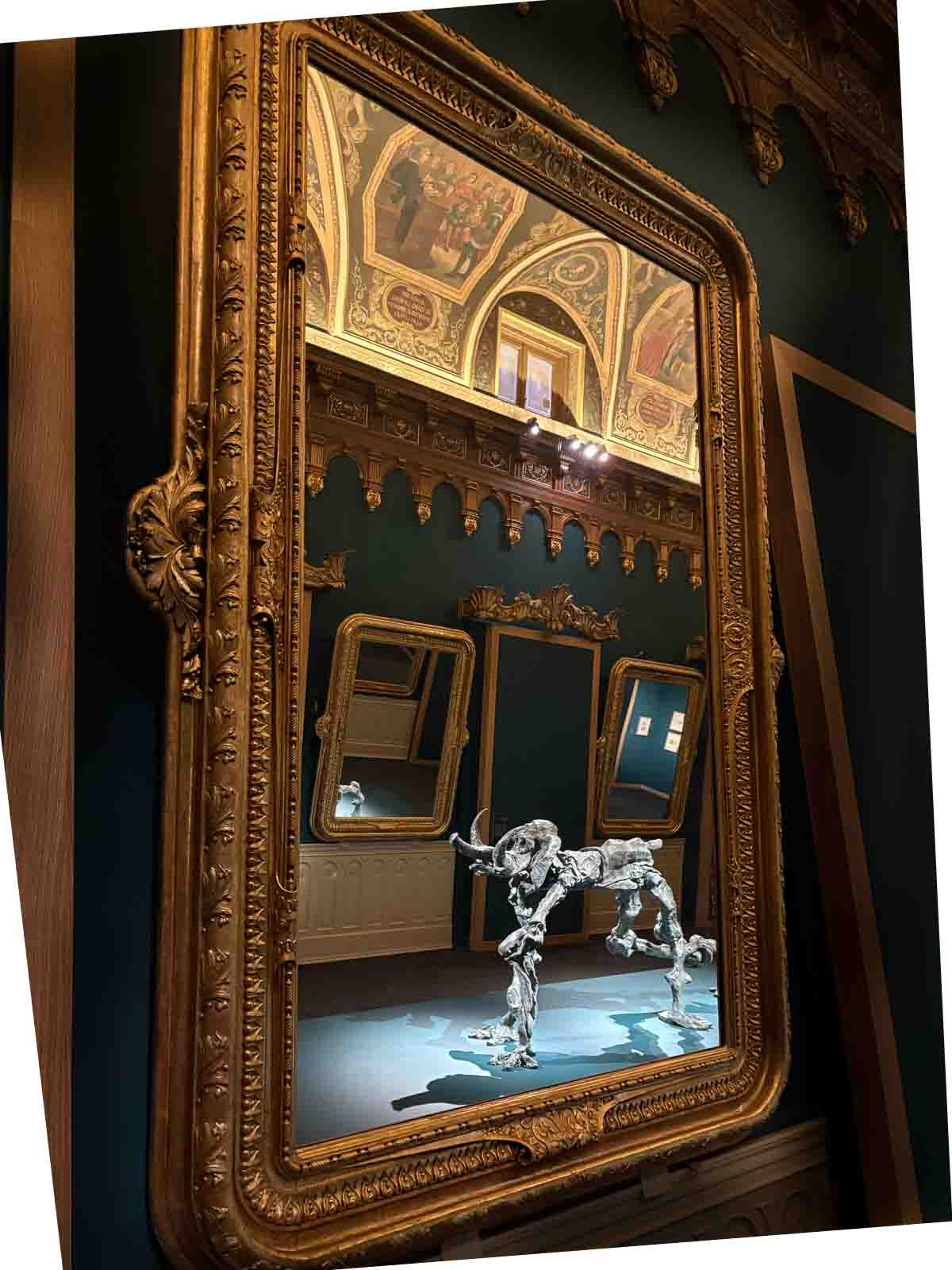
Cosmic Elephant (1981–1986)
Dalí’s interest in science—particularly mathematics and astrophysics—led him to explore the resistance of matter in outer space. To such an extent that he conceived heavy bodies, such as the elephant, within a dimension without gravity, in which matter would adapt itself to weightlessness. In the case of the Cosmic Elephant, the artist transformed matter into a symbol of strength and the enduring resistance of nature. Its earliest versions emerged from dreamlike images in which the animal stretches its legs infinitely and becomes a symbol of power and futurity, as seen in the 1948 painting The Elephants (private collection). Over time, the artist developed a sculptural conception of the Cosmic Elephant increasingly removed from the traditional models he had originally employed.
The symbolic connotations of the elephant appear in Dalí’s work from a very early date and form part of his broader aesthetic trajectory, drawing inspiration from classical works such as the Renaissance dream narrative Hypnerotomachia Poliphili (The Dream of Poliphilus, 1499), attributed to Francesco Colonna (1433–1527), in which images of elephants and ants intermingle and whose text Dalí consulted on various occasions. As a more immediate monumental reference, one may also note the elephant associated with the Arco della Pace and especially the spectacular obelisk borne by an elephant created by Gian Lorenzo Bernini (1667), known as Il Pulcino della Minerva, located before the church of Santa Maria sopra Minerva in Rome.
Ama de llaves (Housekeeper / Keeper of the Keys) (1988)
The Surrealists defined themselves as bearers of keys because they open the gates to the unknown and allow one to move beyond the rational in order to reach the suprarational. This everyday object, the key, forms part of the recurring archetypes among Surrealist artists, who altered its meaning in the modern world in order to propose a new way of expressing the depths of the subconscious through ordinary objects. It is a means of unsettling daily life and creating aesthetic languages of complex meaning.
Dalí, like Giorgio de Chirico (1888–1978) and André Breton (1896–1966), believed that the key, as a visible object, grants access to the invisible realm of the unconscious. To this idea are joined Freudian theories associating the key with the power to open the doors to knowledge and to the deepest regions of the mind. For this reason the motif appears repeatedly in his work, such as in the illustration created for the edition of Conte de Nadal by J. V. Foix entitled The Watchman (1926), or in cinema through the scene designed for Spellbound (Spellbound, 1945) by Alfred Hitchcock, which carries great significance for the concept of the “psychoanalytic key.” Those who carry keys, as in the case of the housekeeper represented in the sculpture, can open doors closed to those who are not their rightful holders. Dalí constructs a visual language in which the key becomes a symbol of authority and therefore of freedom, but also an amulet and a form of protection against his own fears.
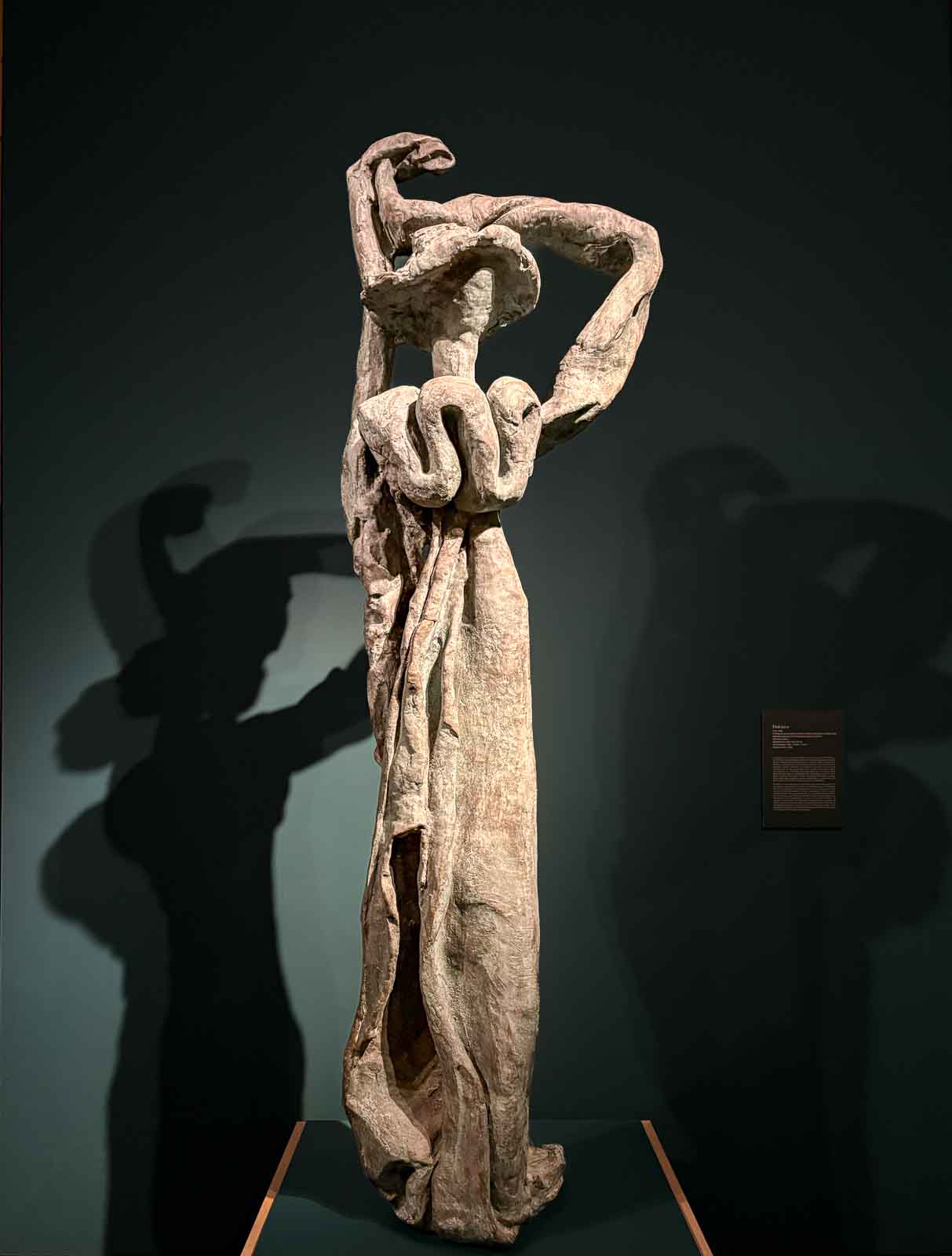
Dulcinea (1986)
Dalí’s passion for the work of Miguel de Cervantes (1547–1616) recurs throughout his artistic career. From 1925 until his death in 1989, he continually produced variations on Don Quixote. Illustrations, drawings, and sculptures based on the novel’s characters permeate his aesthetic universe, creating a unique artistic dynamic that culminates in the three series he created between 1945 and 1975. These series are regarded as landmarks in the historiography of illustrations devoted to Cervantes’s great masterpiece and are comparable to those produced by artists such as Robert Smirke, Adolph Schrödter, Gustave Doré, Adolphe Lalauze, and the Spaniards José del Castillo and Antonio Carnicero.
In this bronze sculpture two important aspects of Dalí’s work converge. On the one hand, there is his passion for Cervantes’s world, through which the figure of Dulcinea is elevated to the status of muse and linked to the aesthetic metaphor of Gala, who appears as his spiritual support in the face of his own inner monsters. Gala-Dulcinea becomes one and the same person, just as the artist identifies himself as Alonso Quijano-Dalí, governed by imagination, reason, and balance in opposition to irrationality and fantasy. On the other hand, she represents light, imbued with a certain mysticism that had long accompanied the artist in his visual expressions and which he recreates with a degree of ingenuousness, as can be seen in a chromolithograph entitled Dulcinea (Dulcinée) del Toboso from 1971 (private collection).
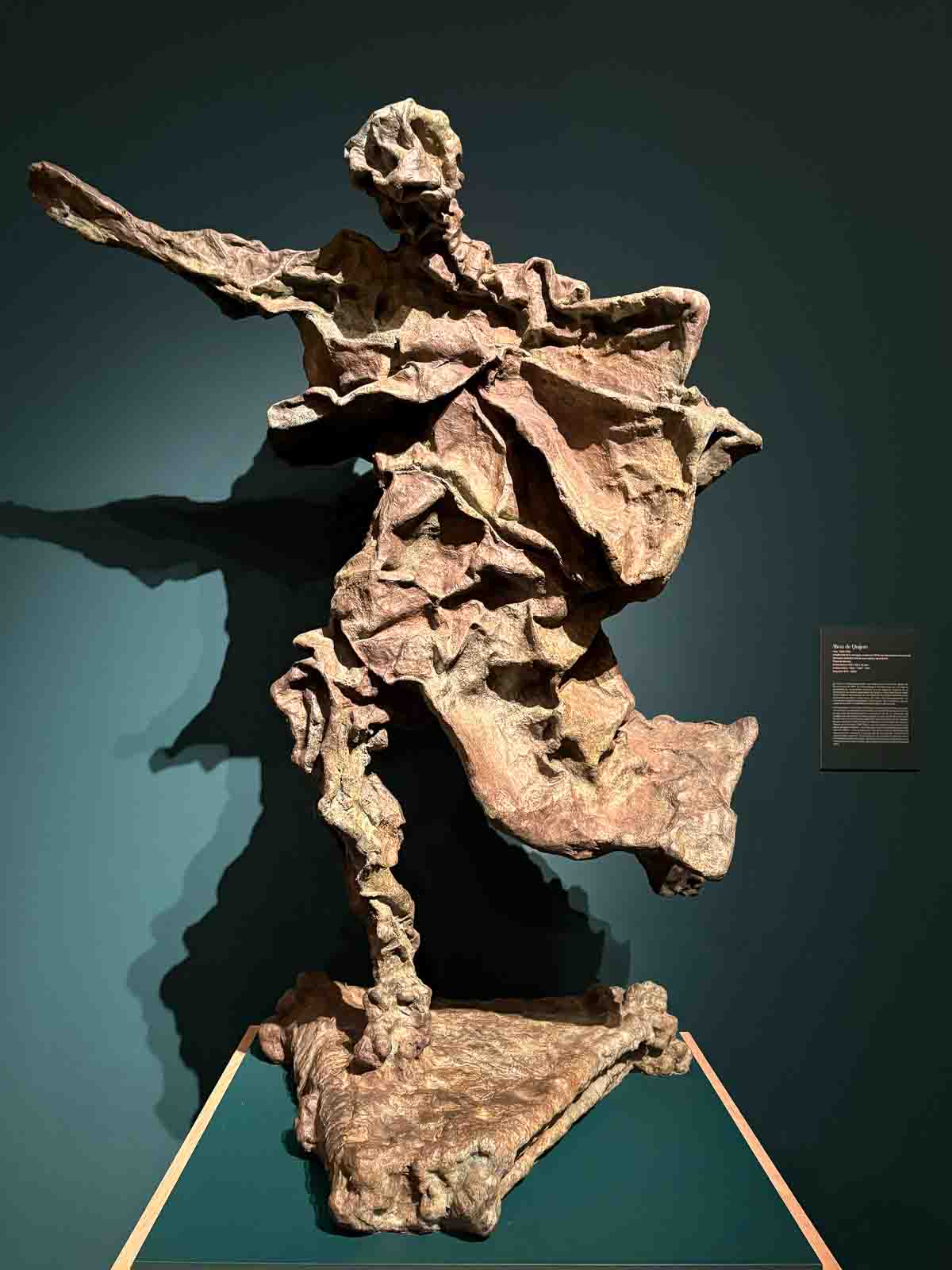
Soul of Don Quixote (1976–1978)
This work was created during Dalí’s stay at the St. Regis Hotel in New York in 1975. The artist went so far as to describe it as “a cybernetic figure,” seeking to evoke through the rough texture of the clothing the worn rags of Quijano. To heighten its value as a “cybernetic figure,” he initially incorporated golden elements into its base. Though these elements have since disappeared, several photographs documenting them remain. Dalí produced two versions of the work, one in tinfoil and immediately afterward another in wax.
As an avid reader, Dalí possessed a deep knowledge of the literature surrounding Cervantes’s masterpiece, and his empathy for the book manifests itself in his many representations inspired by it. The hidalgo’s obsession with finding pure souls, his unconditional love for an unreal being, and his profound idealism—all of which resonate with what Dalí perceived as the Hispanic character of the author—deeply fascinated him. Dalí also became obsessed with the figure of Miguel de Cervantes (1547–1616), not only because he compared himself to Cervantes as a creative genius—as he explained in his Open Letter to Salvador Dalí in 1966—but also because he drew from Cervantes lessons about survival and the tragedy of great men in Spain: “For me, what is degrading is to die in misery, as Cervantes did after creating the immortal Don Quixote, or as Christopher Columbus did despite having discovered America” (Dalí and Parinaud, 1973).
La Crótalos (1987–1988)
In this sculpture Dalí merges a living image—that of a small flamenco dancer, Carmen, who masters the dance and is known as La Crótalos (a name derived from the term for a Mediterranean percussion instrument made up of two bronze cymbals struck together).
Dalí’s fondness for flamenco music as an element of Hispanic identity is well known. At his residence in Cadaqués he welcomed flamenco dancers and performers who enlivened his gatherings and celebrations. It is very possible that this affinity for flamenco originated during his years of friendship with Federico García Lorca (1898–1936), who was deeply passionate about the art form. During Lorca’s stay in 1927, the two friends frequented the flamenco circles of Figueres and Cadaqués, where they met the art critic Sebastià Gasch (1897–1980), himself equally fascinated by flamenco culture, and who said of Lorca: “He oozes the South from every pore.”
In keeping with his own era, Dalí sought to fuse an ancestral dance—already recognized since Antiquity as part of Hispanic identity (in Rome the dancers from Cádiz were famous)—with modern artistic actions. Thus, in 1957 he invited La Chunga (Micaela Flores Amaya) to stage a happening at his house in Cadaqués in which the dancer stamped rhythmically upon a white canvas laid on the floor while Dalí applied paint over it.